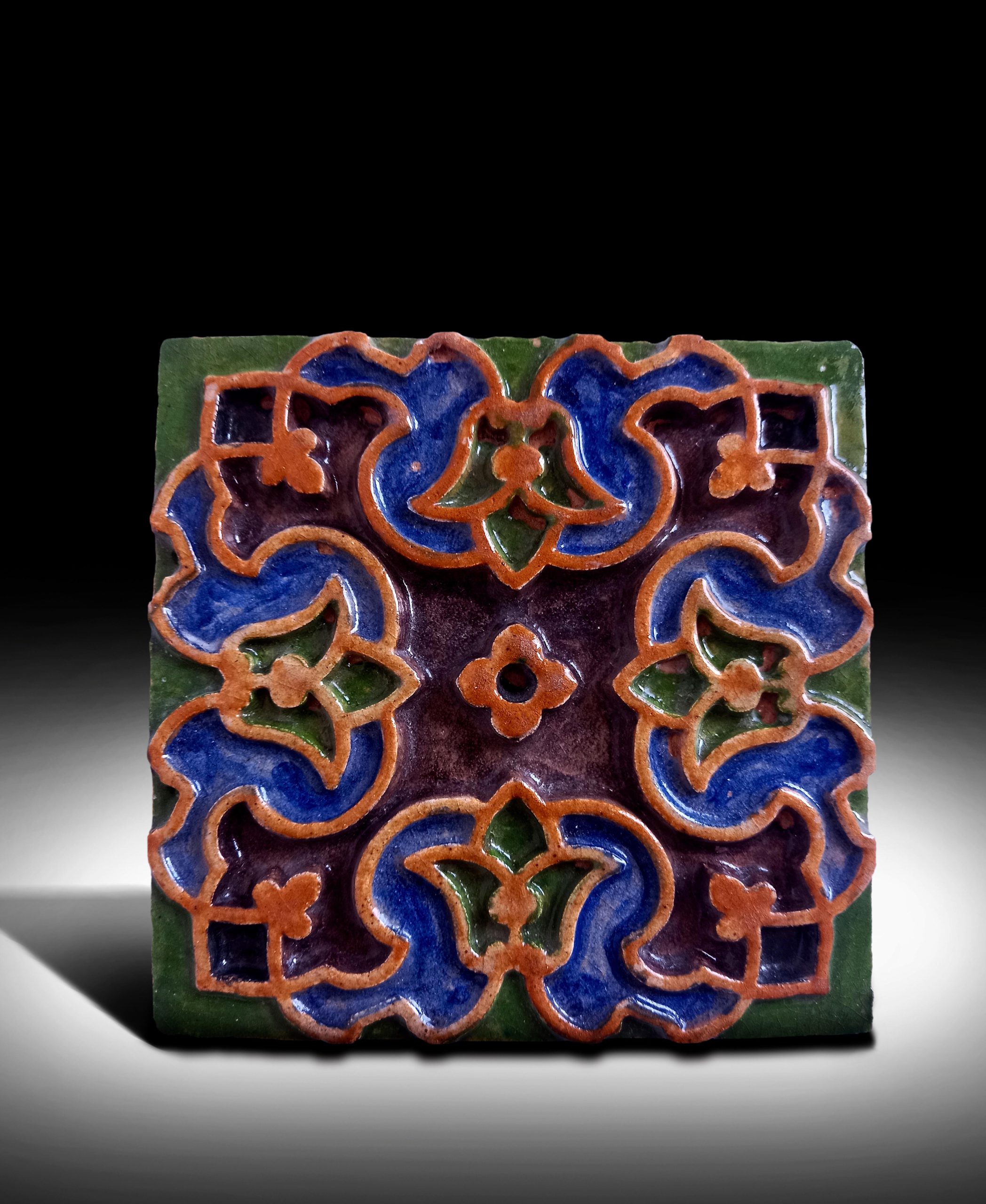
Narratives:: | Comparable tiles references at Victoria and Albert Museum in London said to come from the tomb of the saint Shah Madani at But Kadal, Zabidal, near Srinagar in Kashmir. The group in the Victoria and Albert Museum was acquired from Mr Frederick H. Andrews in 1923. He had been living in Srinagar, where he was the Director of the Technical Institute of Kashmir, and wrote to the museum in 1922 offering to sell his collection before he left that year to return to the United Kingdom.The Howard Hodgkin Collections
References:
1. See Robert Skelton et al, The Indian Heritage: Court Life and Arts under Mughal Rule, 1982, pp. 26-27, nos. 5, 6, 7, 8, 9 and 10, for a discussion of Mughal tiles in the collection of the Victoria and Albert Museum. |
|---|