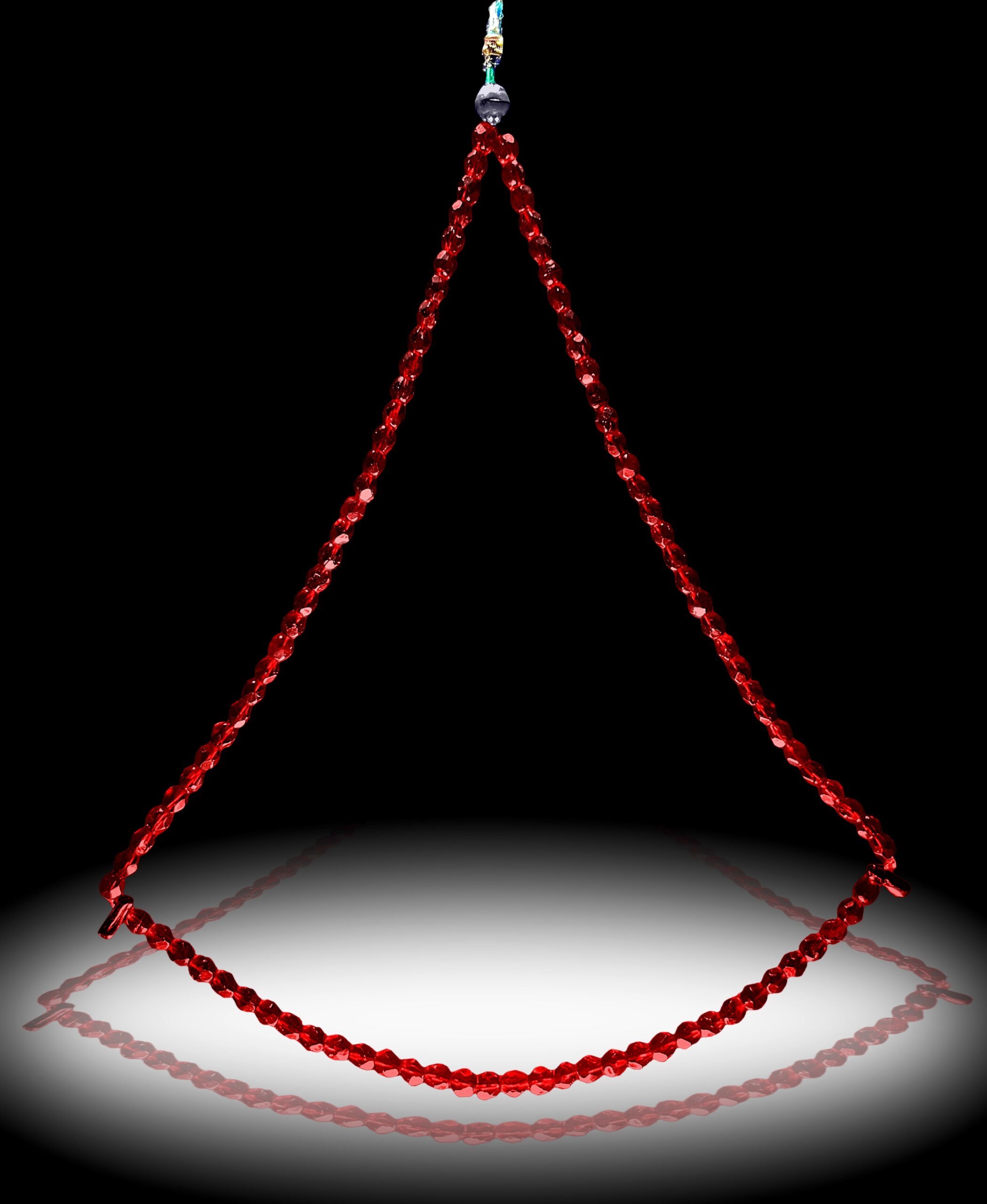
Footnote: | Mughal Jewels treasures and emperors have had, for centuries, a particular love for precious stones. The references found in numerous memoirs and chronicles of this period show the strong cultural belief in gemstone properties. The Timurids, ancestors of the Mughals, had begun the tradition of engraving titles and names on stones of outstanding quality and, along with diamonds and emeralds, large spinel beads were certainly their favourite. Emperors were commissioning special officials to search for spectacular stones with no expense spared, that they would then wear in multiples to adorn their outfits. As much as these gems were a symbol of the opulence and dignity of the empire, they were also treasured as protective talismans. These spinels were mainly originating from the Badakhshan mine, in the ‘Pamir’ region (on the frontier between Afghanistan and Tajikistan). This province gave its derived name to spinels, described as ‘Balas rubies’ for decades. The chemistry would demonstrate during the 19th Century that spinel’s and rubies are two different gems, but for long, any red stones were described as ‘ruby’. Hence, it is interesting to note that among the most famous historical engraved spinel’s are the ‘Timur Ruby’ (in fact a spinel), now in the Royal Collection of HM Queen Elizabeth II of England. Its numerous and long inscriptions give a rare insight into its history, including the name of Emperor Jahangir, and although it is now known that the stone is a spinel, its name has not been changed. Another important engraved spinel is the Carew Spinel, currently in the V&A Museum, inscribed with the names of Emperors Jahangir, Shah Jahan and Aurangzeb. Akbar the Great (1542-1605), third Mughal emperor, collected spinels, wearing them most often directly on the skin, as a ‘life-protector’ for their blood-red colour, mounted as pendants or bazubands (upper arm bracelets), or simply holding them in his hand. A legend says that the Rulers were to wear three spinels during battles to protect them from injuries and death. Akbar’s son, Emperor Jahangir (1569-1627), followed the family tradition as a great connoisseur of gems, and was even described by a contemporary English visitor, the Rev. Edward Terry, as the ‘greatest and richest master of precious stones that inhabits the whole earth.’ (Pal, op. cit., p. 131). His legendary passion was continued by his son, Shah Jahan, (1592-1666), best known for constructing the Taj Mahal at Agra, one of the most romantic and magnificent architectural wonders in the world, and then to his successor, Emperor Alamgir (1618-1707), also known as Aurangzeb. Inscribing a gemstone with an emperor’s name, often with his lineage and dates, was a mark of appreciation for the exceptional beauty of the stone and bestowed on it respect and imperial dignity. Sometimes it was engraved with the name of more than one emperor as it was passed on from father to son. They were usually drilled through the center and strung onto necklaces, the largest being drilled from side to side on one end and used as pendants. After the fall of the Mughal Empire, in 1857, some of these drilled stones were remounted, such as the present necklace, most probably mounted during the 19th Century. Out of the eleven stones, three are engraved with the name and lineage of their owners: two are inscribed with the name of Emperor Jahangir, with different dates corresponding to the beginning of his reign, and one is inscribed with the three names of Emperor Jahangir, Emperor Shah Jahan and Emperor Aurangzeb. Important engraved spinel beads are scarce. A very fine collection can be seen in Qatar where the Museum of Islamic Art exhibits an important necklace with eleven Mughal spinel beads, for a total weight of 877.23 carats, three of them engraved with the names of Emperor Jahangir and one with that of Emperor Shah Jahan. The auction of the present necklace, comprising a total of 1,131.59 carats, is an exceptionally rare opportunity for any collector to own a museum quality Mughal jewel. |
|---|