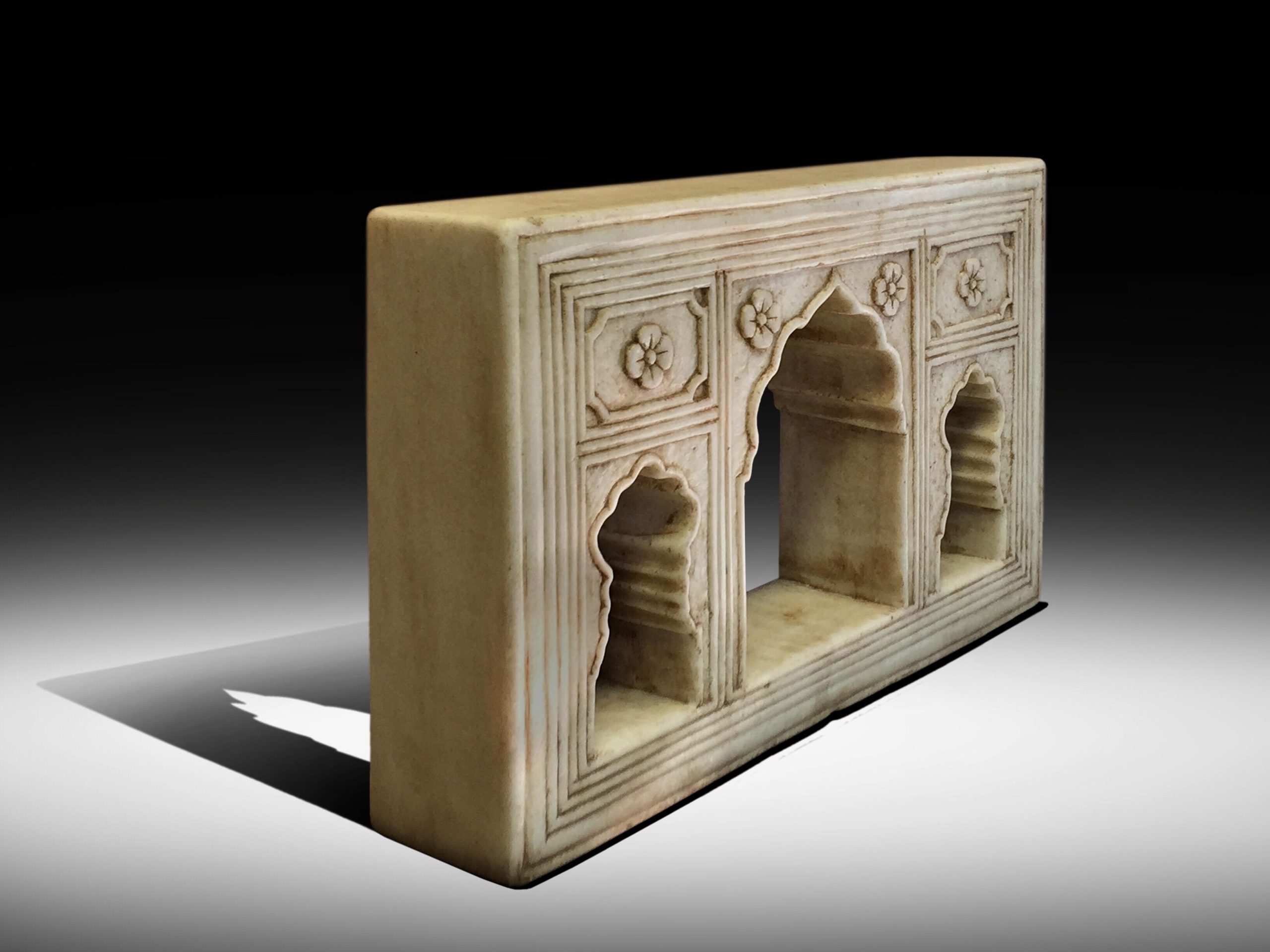
Observations – Note: | Udaipur was founded in 1559, by Maharana Udai Singh IIin the fertile circular Girwa Valley to the southwest of Nagda, on the Banas River. The city was established as the new capital of the Mewar kingdom. This area already had a thriving trading town, Ayad, which had served as the capital of Mewar in the 10th through 12th centuries.The Girwa region was thus already well known to Chittaud rulers who moved to it whenever the vulnerable table and Chittaurgarh was threatened with enemy attacks. Rana Udai Singh II, in the wake of 16th-century emergence of artillery warfare, decided during his exile at Kumbhalgarhto move his capital to a more secure location. Ayad was flood-prone, hence he chose the ridge east of Pichola Lake to start his new capital city, where he came upon a hermitwhile hunting in the foothills of the Aravalli Range. In the myth, the hermit blessed the king and guided him to build a palace on the spot, assuring him it would be well protected. Udai Singh II consequently established a residence on the site. In November 1567, the Mughal EmperorAkbarconquered Chittor. To protect his territory from attack, Rana Udai Singh built a six-kilometre-long city wall, with seven gates, namely Surajpole, Chandpole, Udiapole, Hathipole, Ambapole, Brahmpole, Delhi Gate, and Kishanpole. The area within these walls and gates is still known as the old city or the walled city.In September 1576, Akbarhimself arrived at Udaipur and remained there for 6 months until May 1577.[16] In 1615, Rana Amar Singh accepted vassalship to Mughal rule under Emperor Jahangirand Udaipur remained the capital of the state, which became a princely stateof British Indiain 1818. Being a mountainous region and unsuitable for heavily armoured Mughal horses, Udaipur remained safe from Mughal influence despite much pressure. {citation needed} At present, MaharanaMahendra Singh Mewaris the 76th custodian of the Mewar dynasty. |
|---|