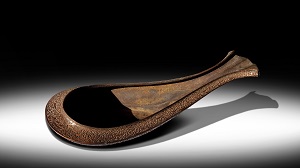
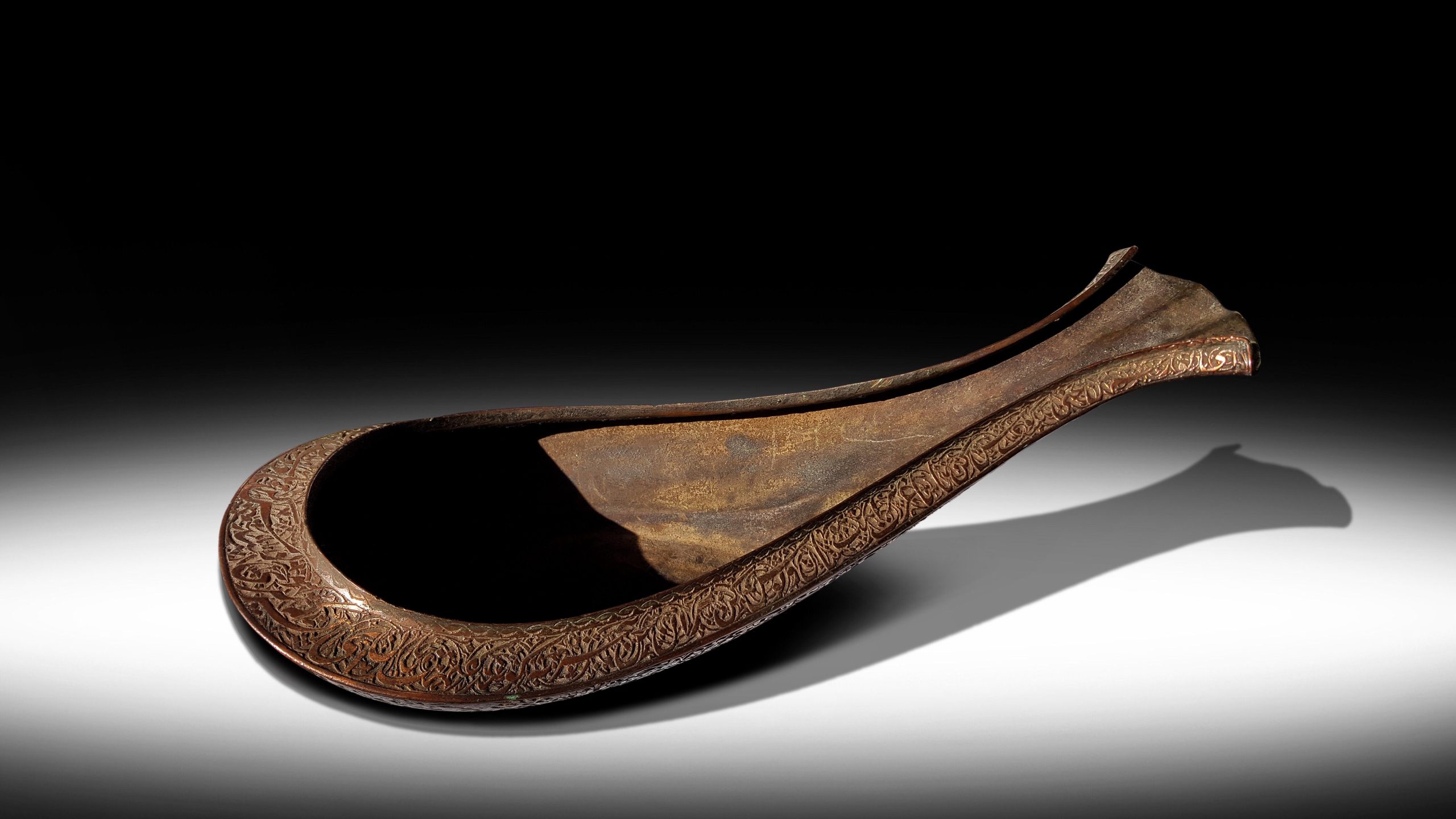
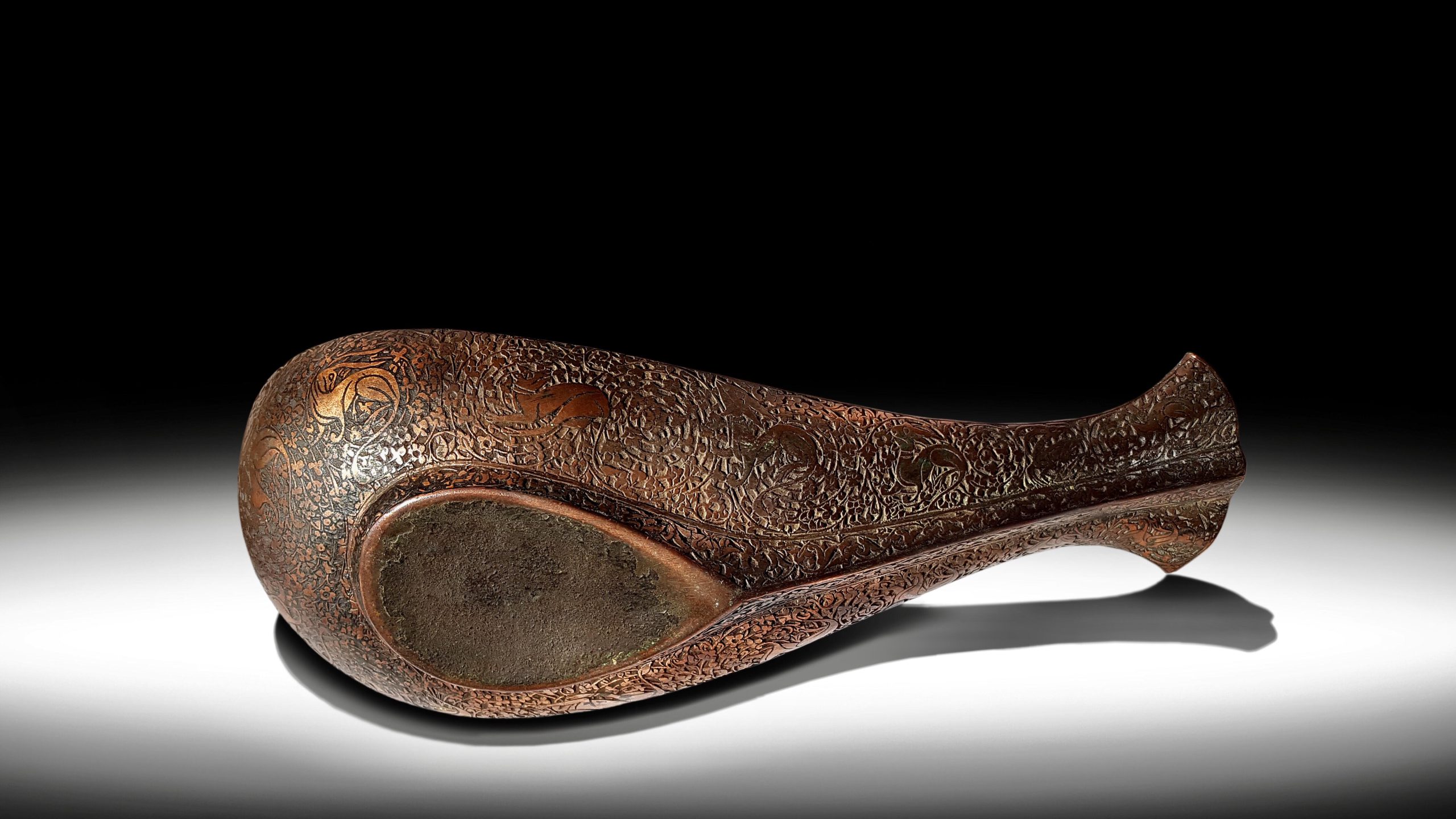
DESCRIPTION: | Flaring out from the base with angled sides and triangular section fishes engraved as pursues on the outer rim, and the extruded at one point to the curving trough spout, the sides with the main band of vine around linked roundels containing large palmettes alternating with “Nastaliq, also romanized as Nastaʼlīq, is one of the main calligraphic around the rim.Illustration of groups of animals engraved on the body and band with scrolling vine behind groups of three animals divided by quartered blazon roundels, a band of motifs intertwined with “Nastaliq” around the rim, the interior with a stylised fish-pond, the underside with interlaced strapwork forming panels containing arabesque interlace and paired birds around an animal combat centre,skilled polished over.Condition Reports:
Principally in unique condition. |
|---|
Lot Essay: | In form this pouring vessel is very closely related to one in the Nuhad Es-Said Collection (James Allan, Islamic Metalwork in the Nuhad Es-Said Collection, 1982, no.21, p.100-101), suggesting a similar date of the mid 14th century. In some of its decorative features too, the Nuhad Es-Said pouring vessel resembles the present example. The lotuses enclosed within roundels in the Said example are similar to those that we find here in roundels that alternate with those containing animal combat groups. The base with its fish whorl interior and decorated underside similarly bears resemblance.However, the present example differs in that it includes unusual quartered blazons in the upper decorative band. Mamluk blazons are not usually quartered, and the only known examples are found in shield rather than roundel shapes. One such example is found on a bowl, also with a similarly decorated upper band, in the Carl Robert Lamm Collection (2072, see Europa under der Orient 800-1900, exhibition catalogue, Berlin 1989, pp. 206 and 599). In the present pouring vessel, the quartered blazon is perhaps a reference to the Arms of Jerusalem which are found on Crusader arms such as those of Lusignan where they are quartered with lions rampant. |
|---|