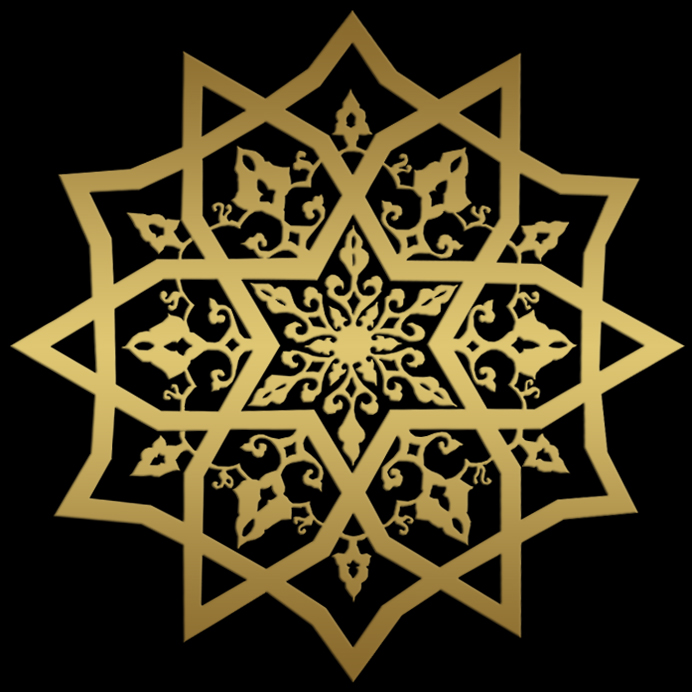
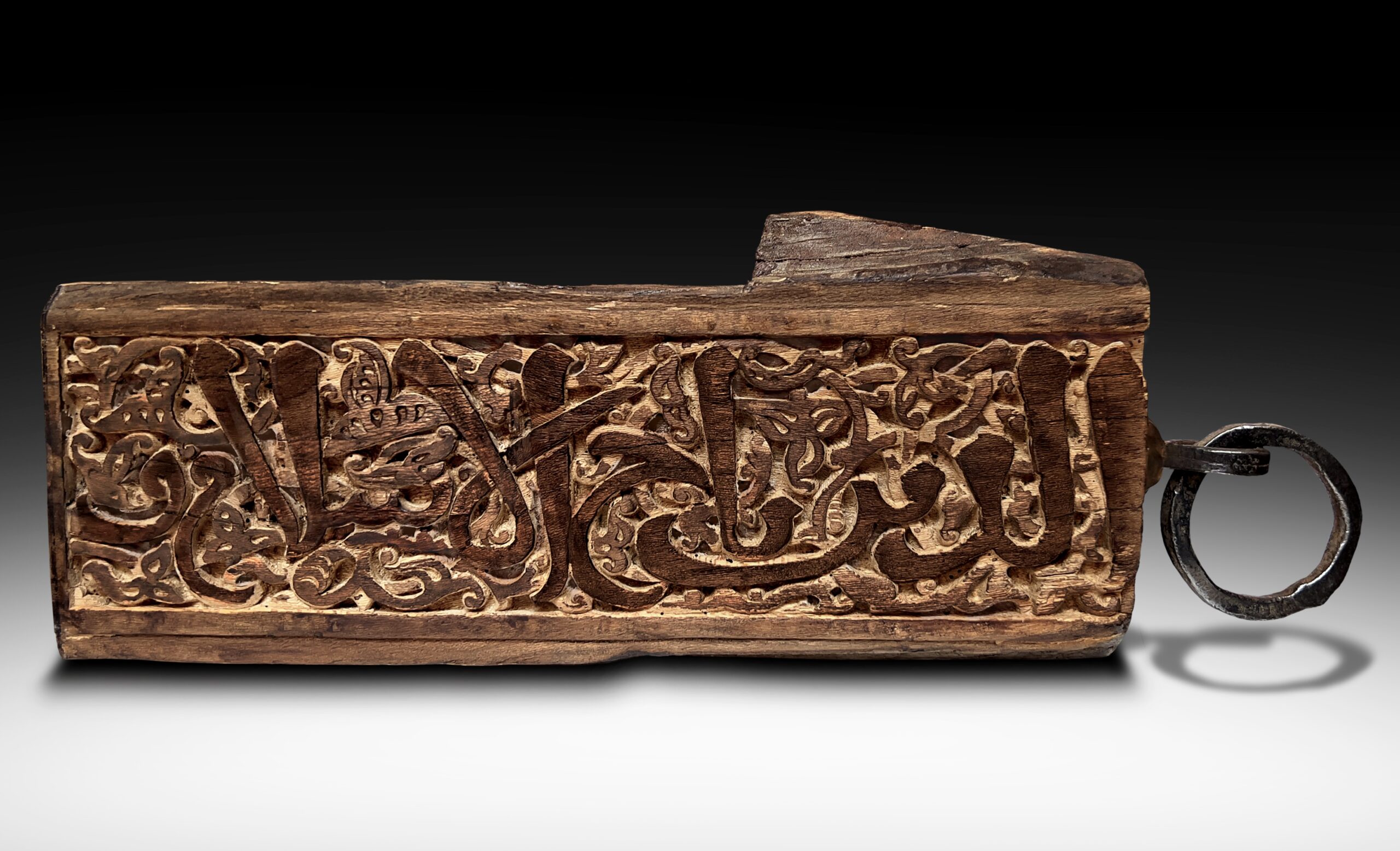
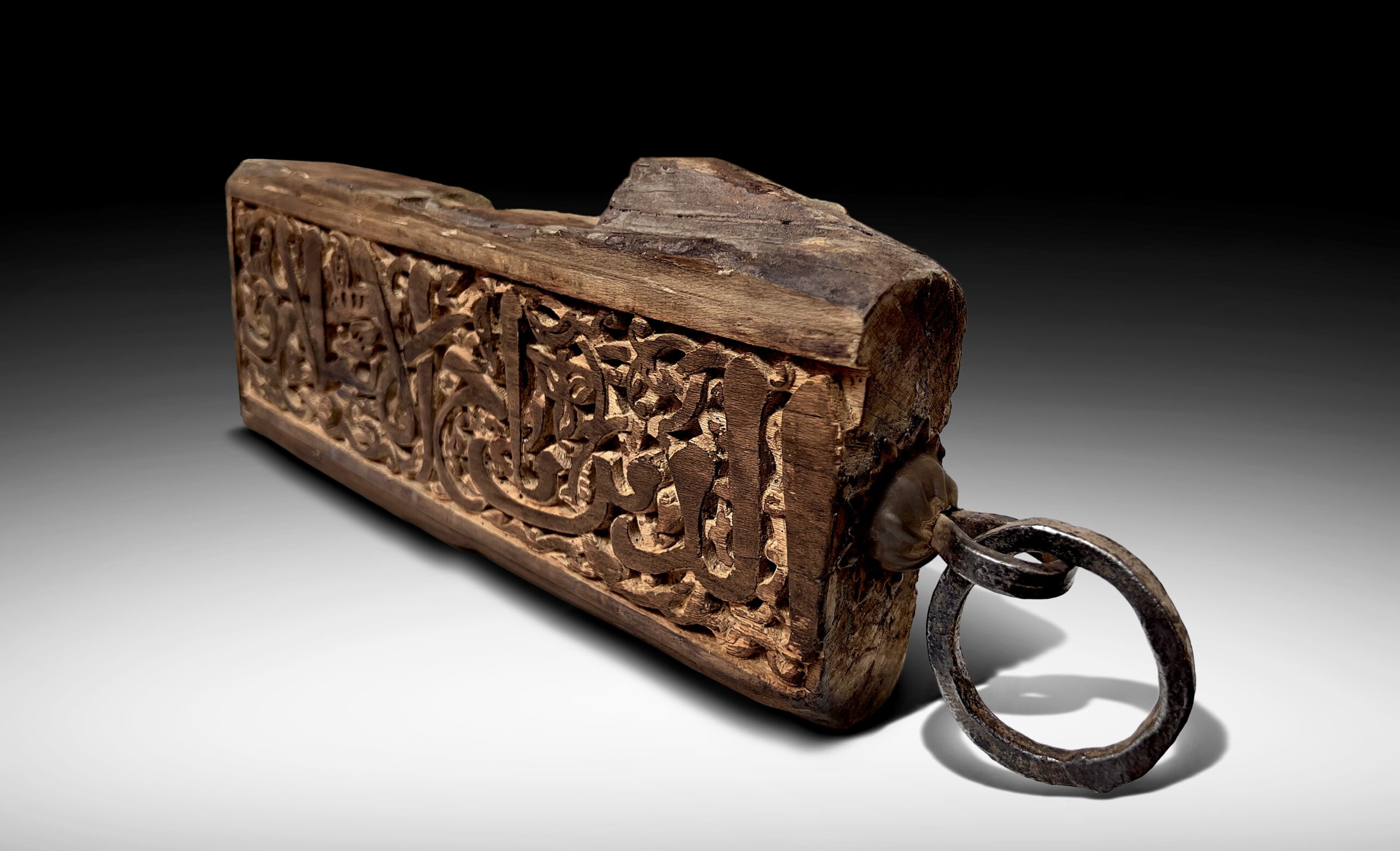
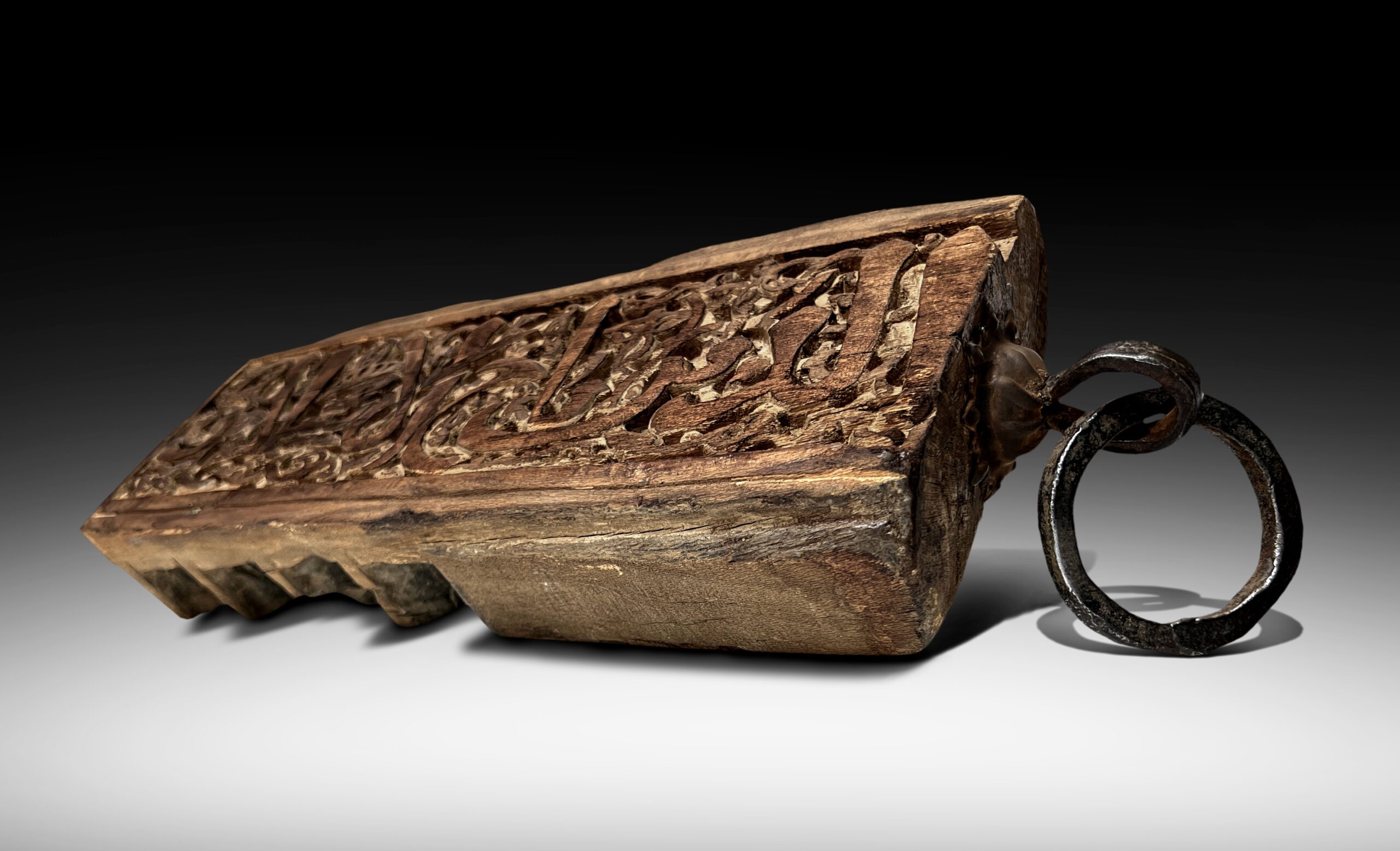
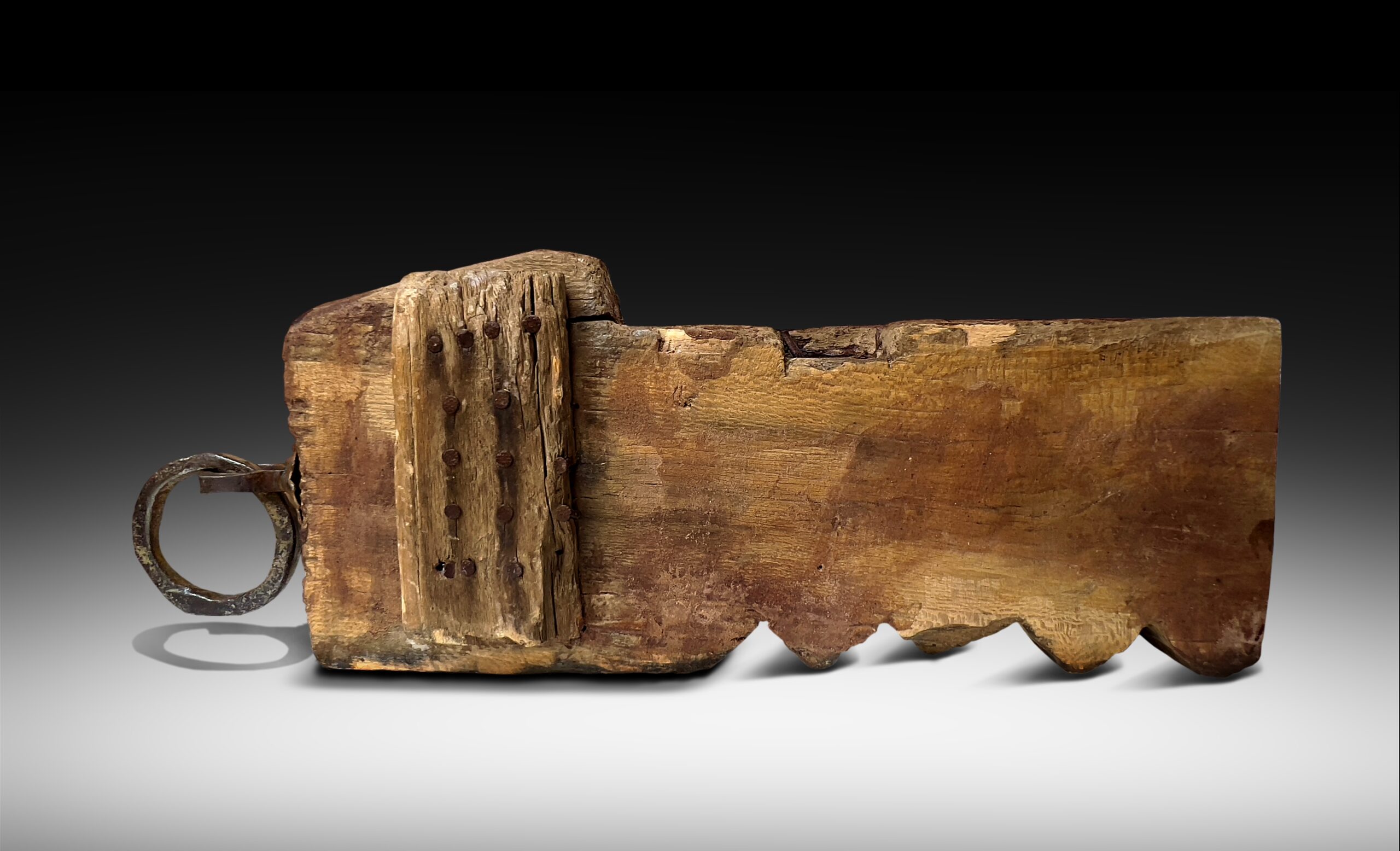
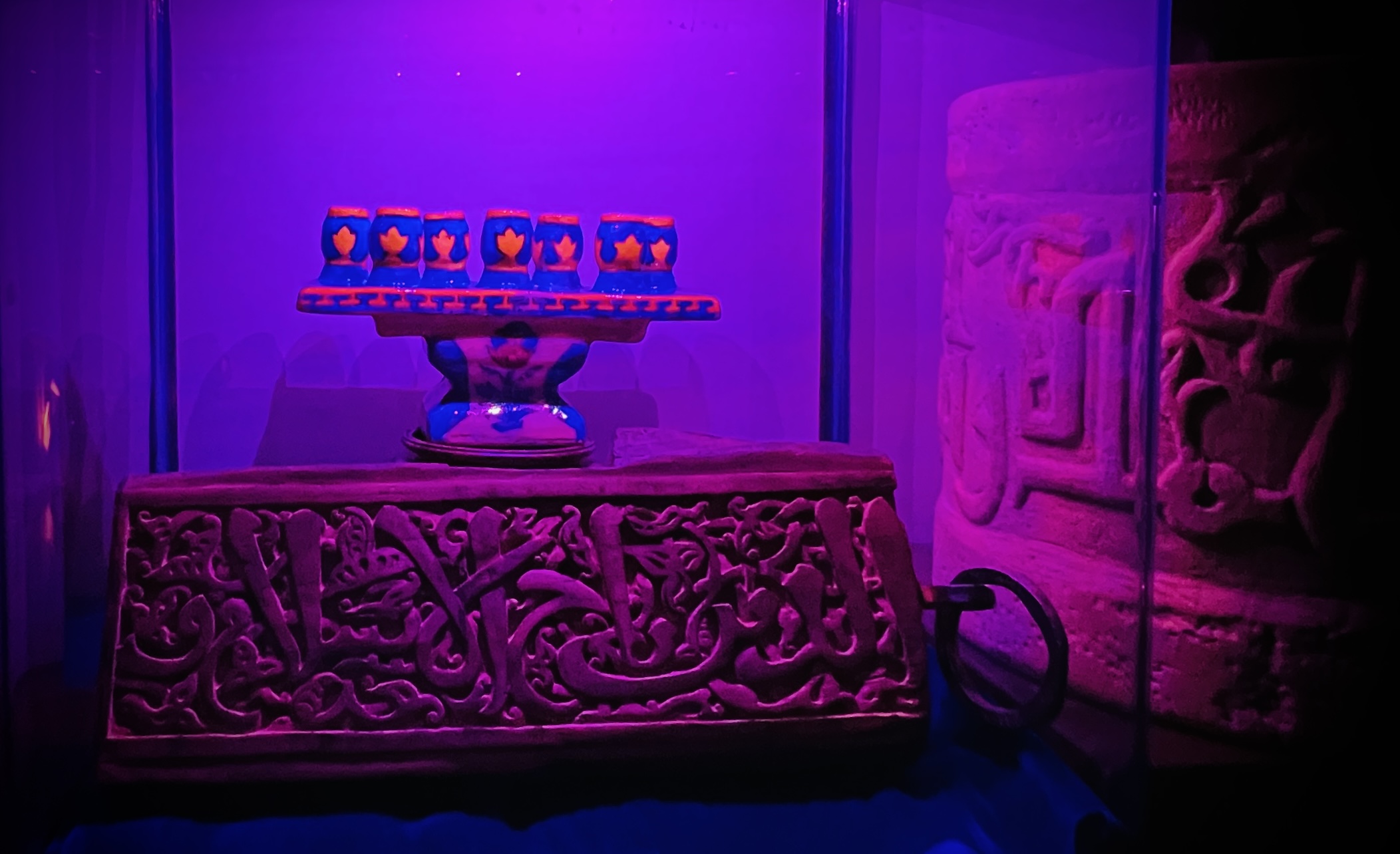
Footnote: | The Seljuks were master woodcarvers. The designs carved in wood were similar to those used by stonemasons. Although wood is a delicate material that is easily affected by fires, damage and wear, many fine Seljuk examples have miraculously been preserved over the centuries. A few are still in situ or museums, although many have been pilfered, destroyed, or smuggled out of the country over the years. Although there was an important series of wooden-pillared mosques built in the late Seljuk era in Central Anatolia, the use of wood was mainly reserved for decorative elements: doors, column capitals, beams, window shutters, door wings, mimbars (mosque pulpits), cupboards, lecterns, Qur’an stands, thrones and panelling. There was probably little wooden decoration or furnishings in Hans, other than wooden screens, and no remaining examples exist. Some of the pieces were signed by the master carver. Woodworking designs include vegetal (palmettes and Rumi patterns), geometric designs (star compositions) and calligraphy. Figures are rarely seen. Hard walnut wood was the favoured wood to use. The techniques used in Seljuk woodwork were carving, open latticework, engraving (incising the surface with a pointed tool), inlaying, openwork appliqué (placing a carved piece of wood onto another wooded plaque) and surface painting (kalemişi) and kündekâri (fill and relief). Carving: The Seljuks used low-relief carving for shutters, sarcophagi, and doors, and high-relief carving for calligraphic friezes and decorative borders. The usual depth of carving varies from 1mm to 2cm. It was most often used on door wings, shutters, and Qur’an stands. Carving could be flat, round, grooved or bevelled (as in the Samarra-style carvings of 9th-century Abbassid art). Inlaying: this technique appeared late (end of 13th century) in Seljuk art, and a fine example can be seen in the minbar of the Eşrefoğlu Mosque of Beyşehir. Kündekâri: The Seljuks developed the technique known as “kündekâri”, a complex technique which used pre-shaped, dried and seasoned pieces of cut and carved wood. Pieces of wood were first cut into shapes, such as polygons, diamonds or stars. Afterwards, the surface area was carved as well. The pieces were then interlocked by mortise, without glue or nails, and mounted on a frame and backing. The favoured patterns were the star and polygon (usually filled with vine scrolls or flowers), kufic inscriptions and other complicated and intricate geometric shapes. This technique is principally seen on large objects such as door wings and the sides of mimbars. Painting on wood As mentioned above, woodwork was sometimes painted in the Seljuk period. No examples remain, although the famous ceilings of the Capella Palatino in Palermo, Sicily, painted in the Fatimid style by the Normans in 1154, can provide some hint into what the painted decoration of the Seljuk palaces may have looked like. Traces of painting have been found in the ruins of the Alara Saray built by Alaeddin Keykubad in 1224. |
|---|