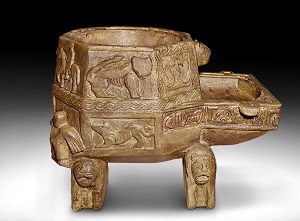
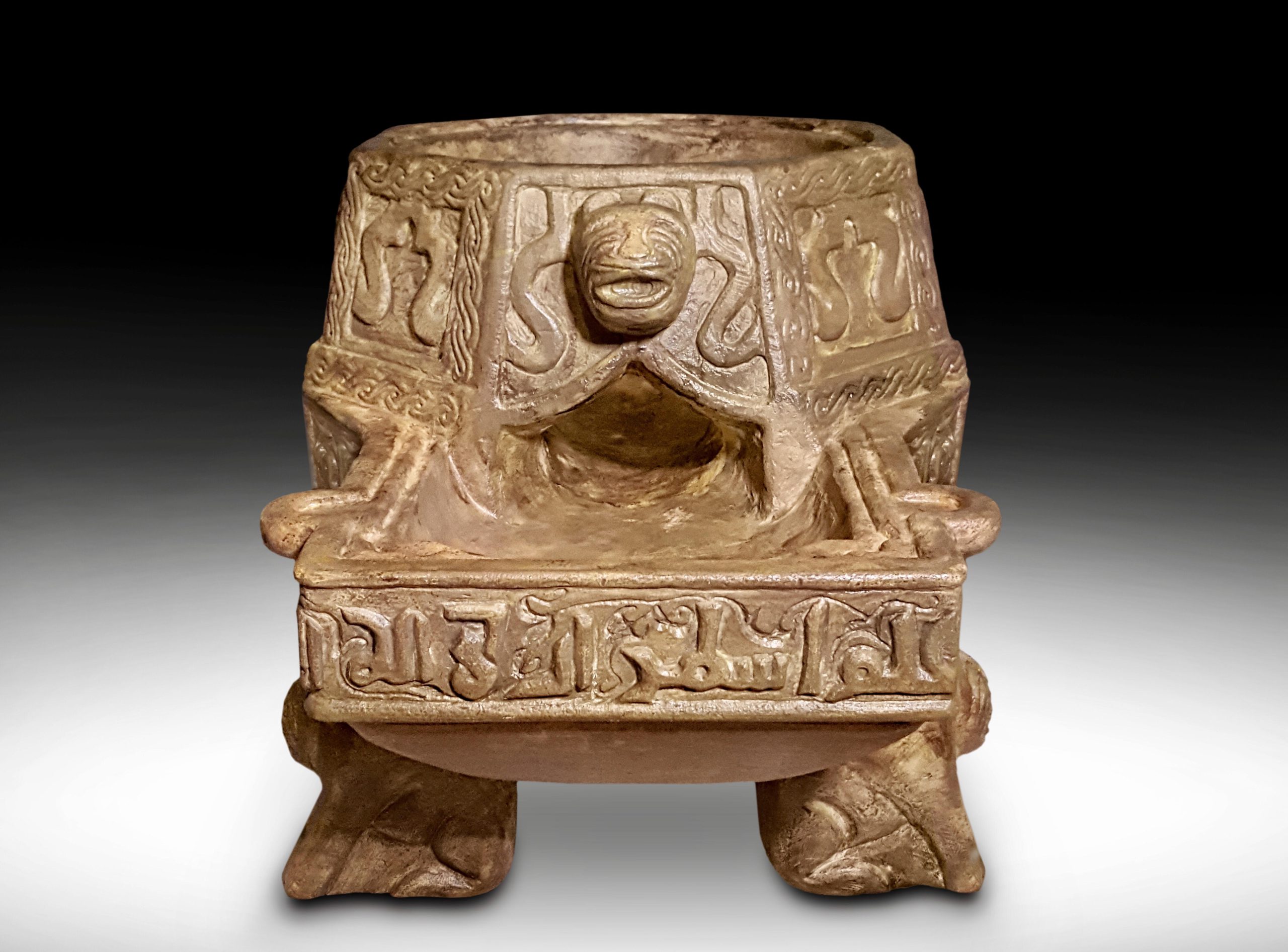
DESCRIPTION: | Carved from a single block of marble with grey veins, the jar-stand consists of a hollow interior and rests upon seated Lions shaped standing on four feet. A tongue-shaped basin from the front of the stand. The carved decoration square Kufic’s band inscriptions around the base, bosses in the form seated of a lion in the standing on four feet and features scallop-shaped incisions on each paw, while a seated figure wearing a headdress and holding a drinking vessel is depicted on both the left and right panels. These panels also feature an incised border with pendant shaped medallions and Kufic inscriptions on the back with the open niche in the centre.The marble jar-stand, locally referred to as a kilga, functioned as a water purifier, and was frequently used during the Fatimid period (909-1171). The stands were designed to support a large terracotta pot placed above which contained the unpurified water. As terracotta has a porous body, the water would drip down from the base of the pot which acted as a natural water filtration system (Knauer, p. 69). The smoothly worn interior of the jar-stand also indicates that water once filled the basin. The clean water would then be collected directly from the kilga. A similar kilga is in The Metropolitan Museum of Art, New York, (Accession Number 20.176). It also depicts a seated figure holding a cup in addition to similar fluted decoration on the feet. |
|---|