


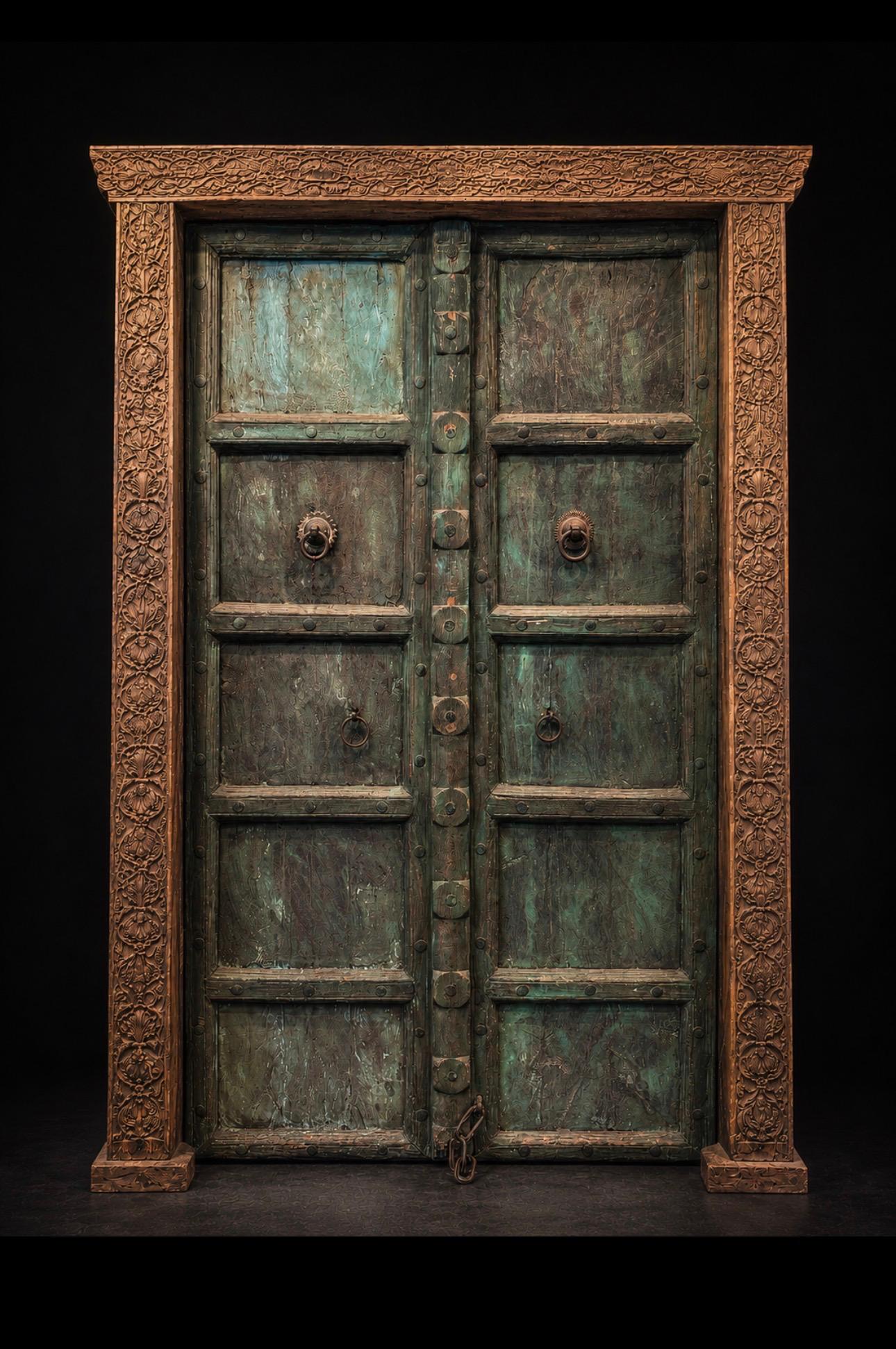
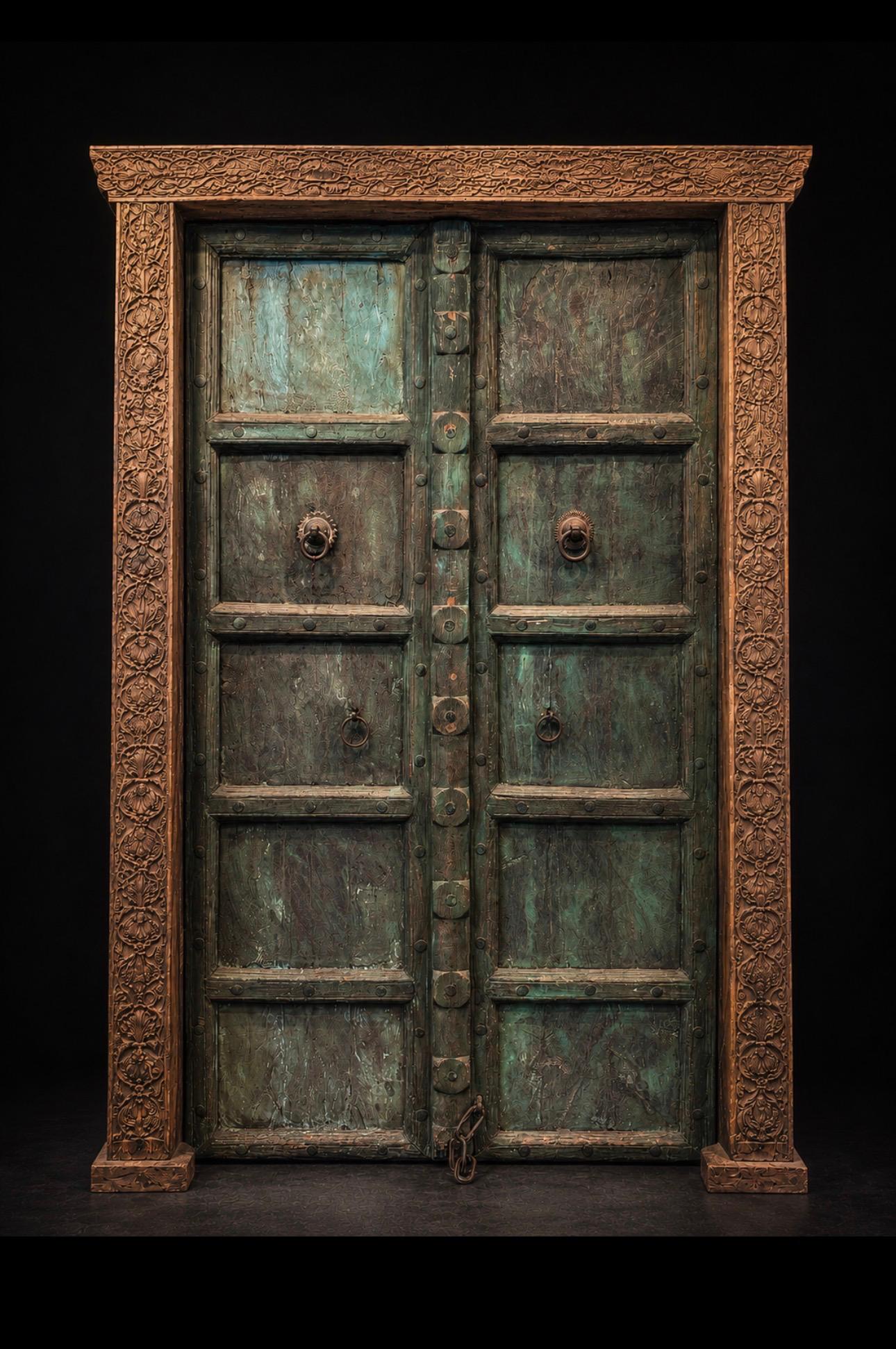
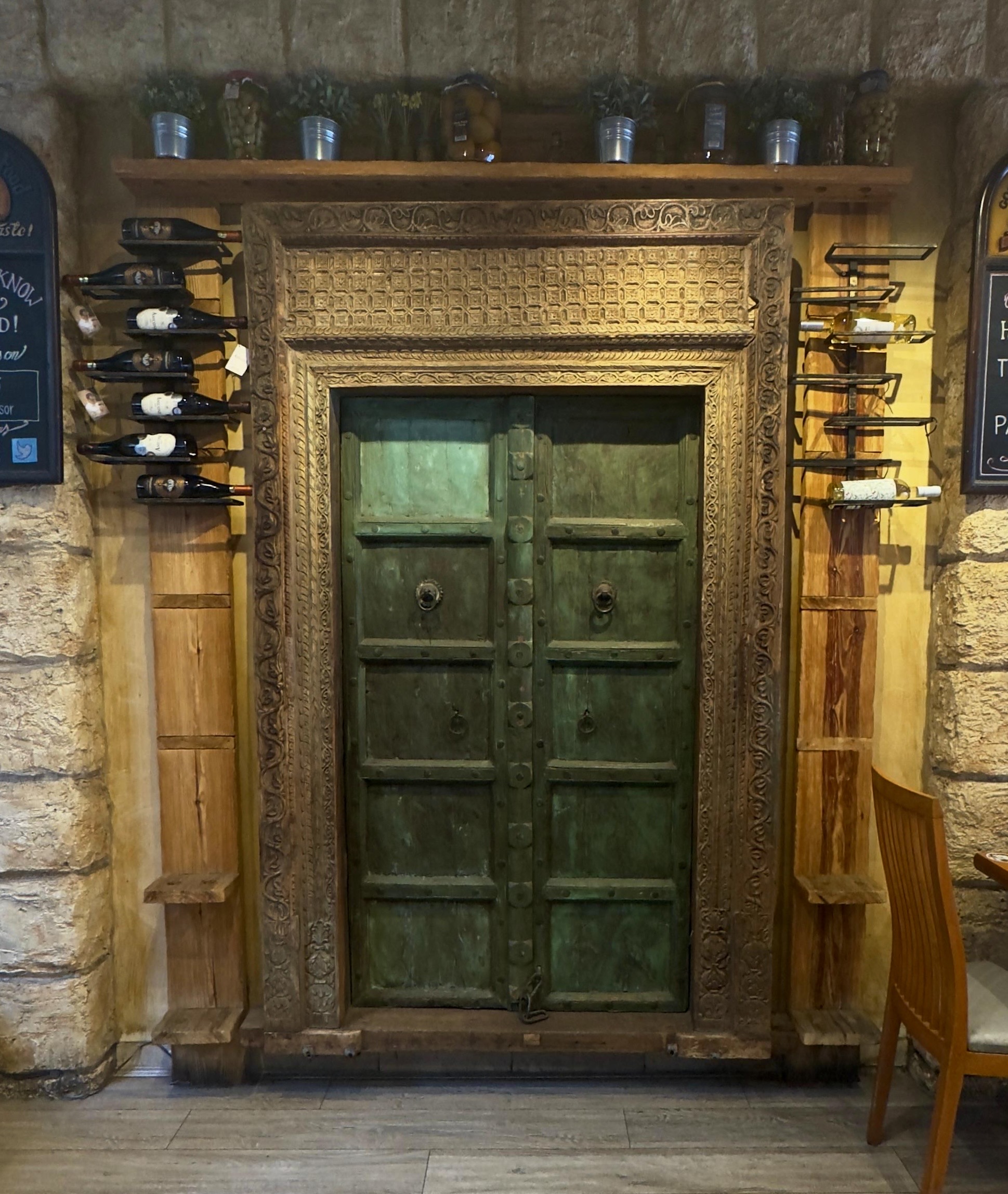
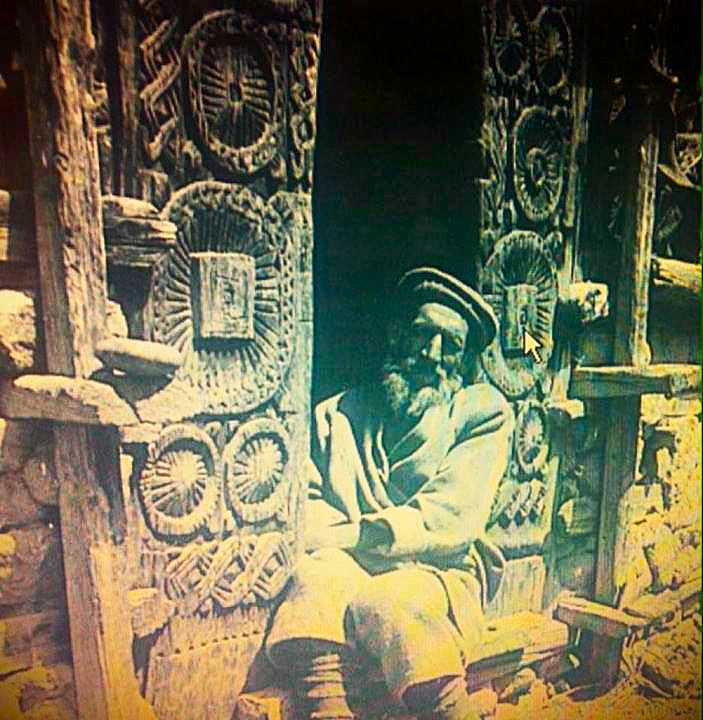
AN MONUMENTAL NURISTAN HAND CARVED HARDWOOD DOOR
PERIOD :
Early 19th Century
ORIGIN:
Nuristan Afghanistan
DIMENSIONS:
Approximately; Height: 230 Cm Width: 143 Cm
DESCRIPTION:
An exceptional and Infrequent 19th-century hand-carved wooden door, hitched to its genuine frame the door is originally from Nuristan is located between Nuristan is a remote province in eastern Afghanistan located on the southern slopes of the Hindu Kush mountain range and set across rugged river valleys and high mountains, bordered by Pakistan to the east and other Afghan provinces like Panjshir and Badakhshan
The piece is comprehensively adorned with elaborate time-honoured carvings, comprising ageing metal spirals and backplate hardware that have been weathered and patinated in the leafy climate of Nuristan.
FOOTNOTES:
Architecture of Nuristan
The traditional timber and stone architecture of Nuristan is one of the most stunning of the many indigenous forms of housing found in Afghanistan. Nuristan is located in a mountainous and inaccessible part of eastern Afghanistan; to its north are the high passes of the Pamir Mountains leading to China; to the south lies the city of Jalalabad, the Kabul gorge and the Khyber Pass. The people of Nuristan are Muslim, converted by the sword by the Amir Abdur Rahman of Afghanistan only in 1896. Many elements of Nuristan’s domestic art and culture are still tied to the pre-Islamic traditions which are maintained by the Kalash people who live just over the Pakistani frontier, on the borders of the valley of Chitral.
Nuristani villages are clustered on steep mountainsides, with dwellings constructed directly above each other, so that one household’s flat roof serves as a patio for the neighbor above. Fruit drying and various outdoor household tasks are performed on these stepped porches, the only available flat exterior space. The patios are connected with notched logs used as ladders and serve as pathways for the movement of people through the village. Homes are generally two-storied; the lower level contains storage rooms and stables. The upper floor is a large single room in which the family cooks, sleeps and receives guests. Nuristani society is largely divided between landowners and hereditary craftsmen, and this social division is reflected in the decoration of their houses.
Traditionally, members of the land-owning aristocracy established and maintained their status by giving feasts to the entire village community, and thus earned the right to carve elaborate decorations on the facade and interior wood columns of their homes. While many feasts were part of the normal social obligations entailed in marriages and other rites, some feasts served only to enhance the prestige of the giver’s family. While the majority of Nuristani were part of the land-owning farming or herding class, each village had at least one family of bari, craftsmen who performed the labour of building houses and making tools, furnishings and household utensils. The bari who executed the elaborate wood carvings on the aristocrats’ houses were not permitted to carve the wooden elements of their own dwellings.
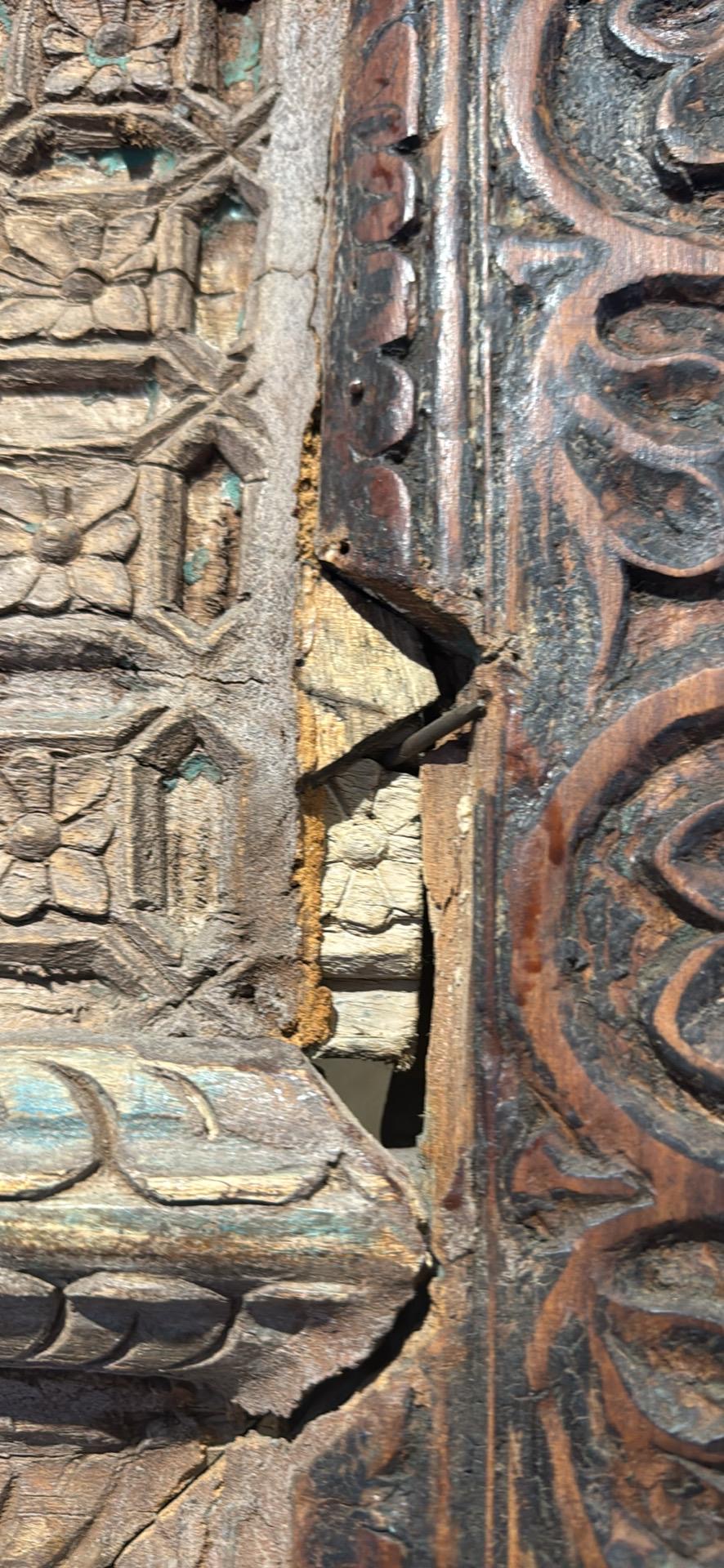
CONDITION REPORT:
As expected for its age, with a slight age-related rupture in the upper right corner observable in the image illustrations.
PROVENANCE:
The Property of ZonZo enterprise with privilege of a Gentleman retained since eraly 2005.
