


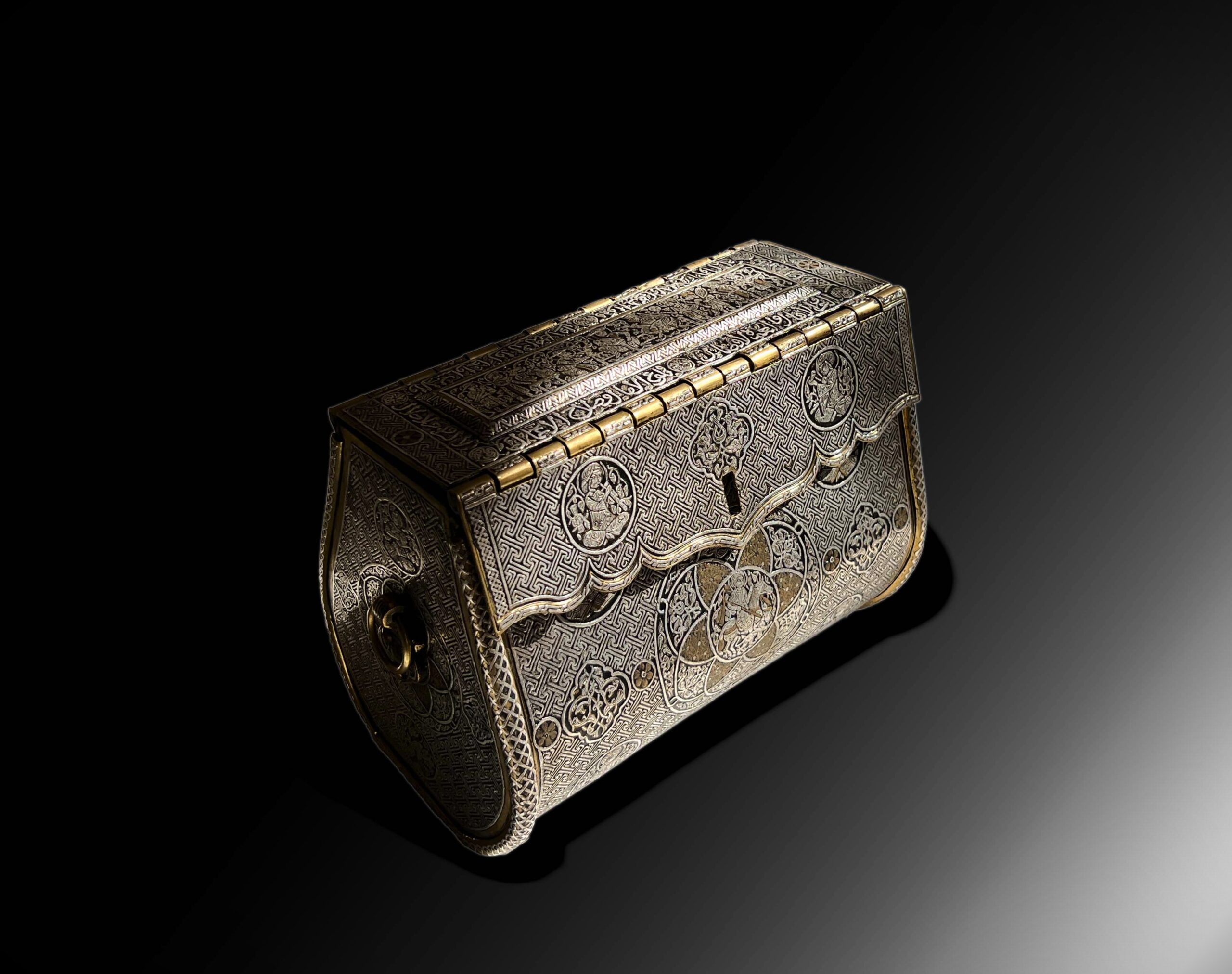
AN EXTRAORDINARY STYLISTIC MOSUL SILIVER BAG ILKHANID DYNASTY,NORTHERN MESOPTAMIA
PERIOD :
12/13th Century CREATED CRAFTSMANSHIP IN THE CITY OF MOSUL, NORTHERN MESOPOTAMIA
ORIGIN:
THE CITY MOSUL, NORTHERN MESOPOTAMIA
DIMENSIONS:
Approximately Height: 16.7 Cm Length: 22.1 Cm
DESCRIPTION:
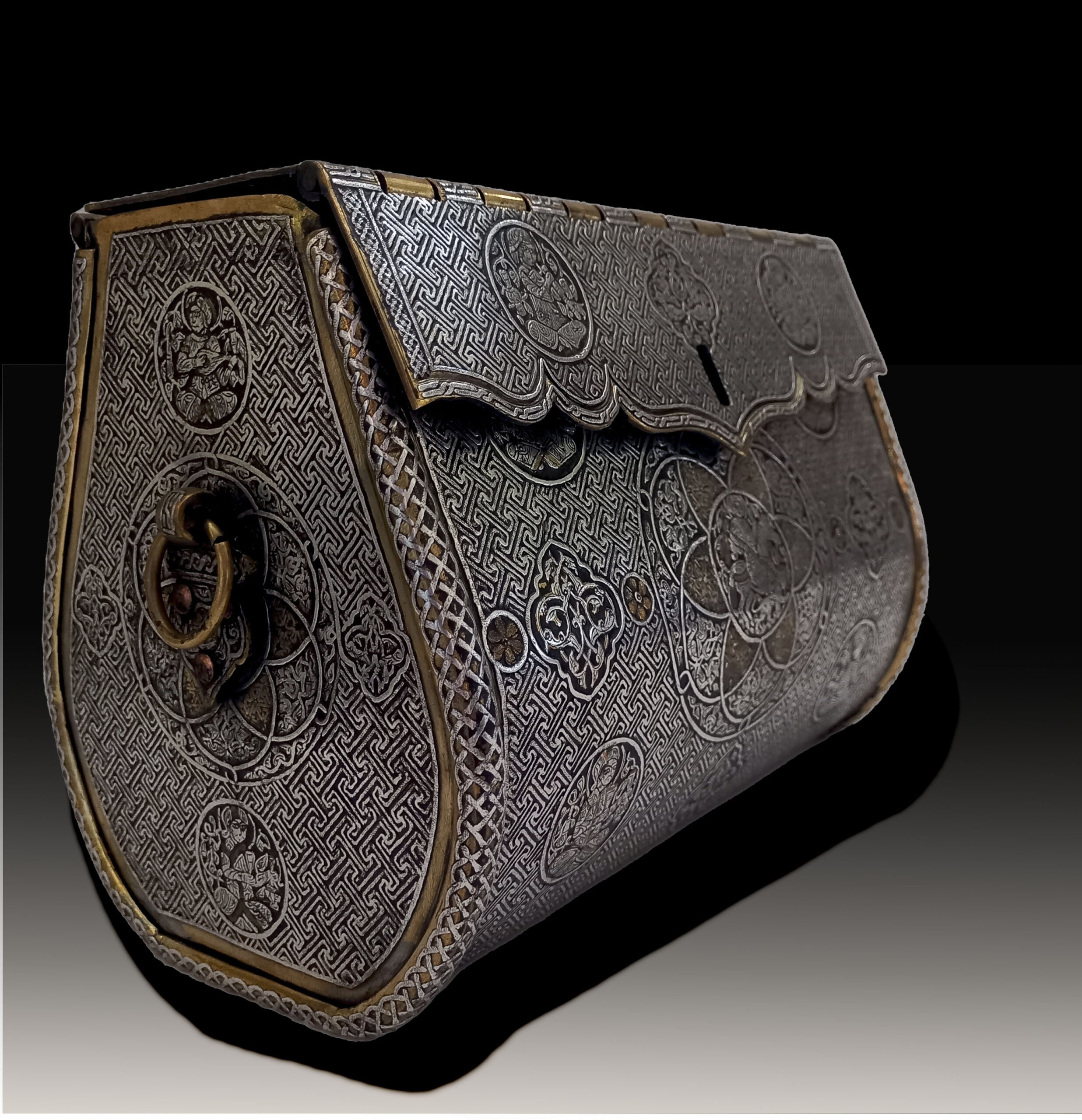
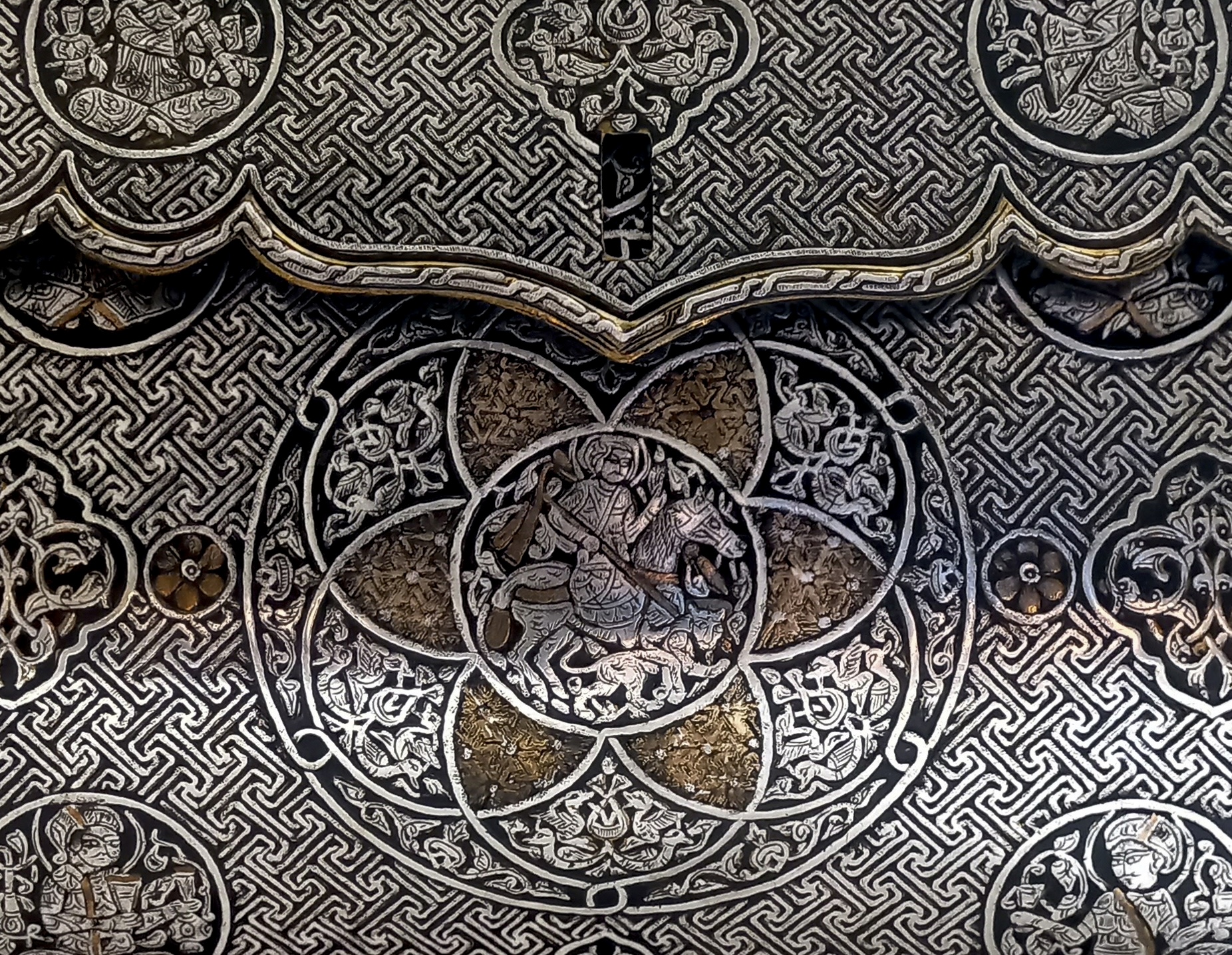
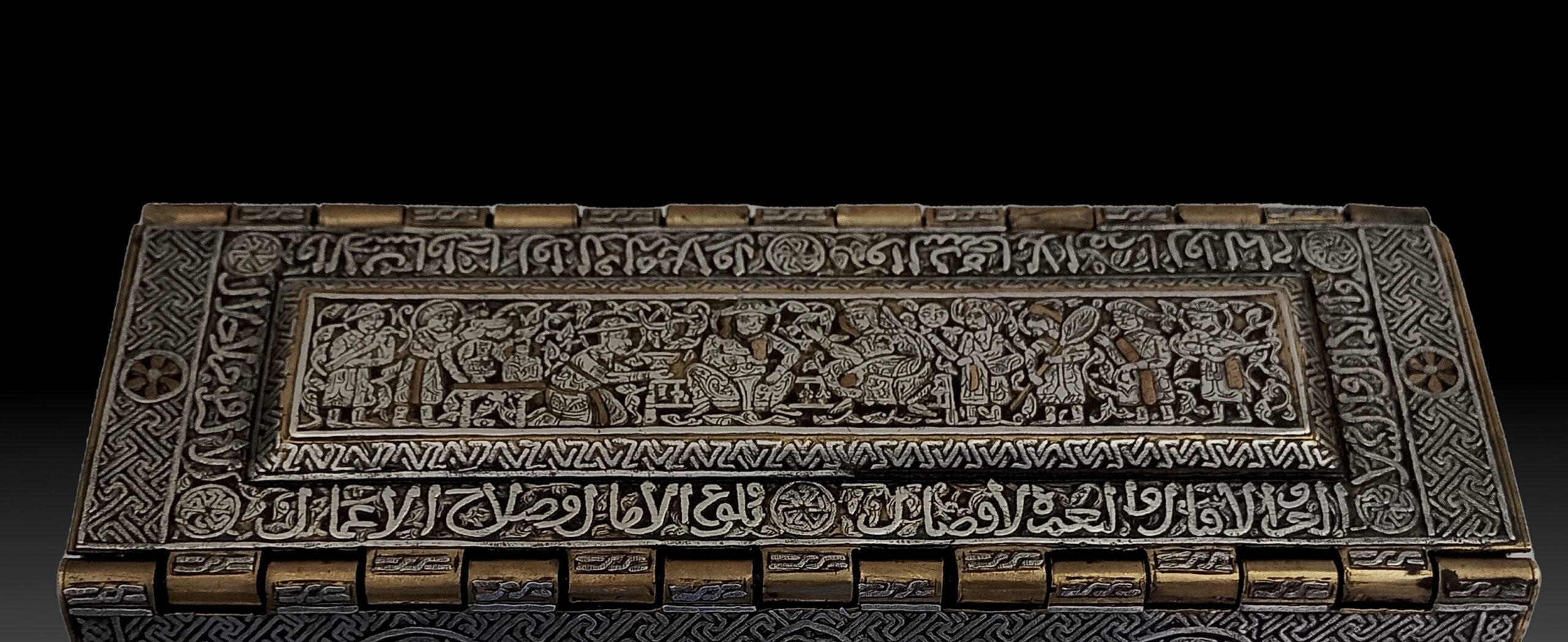
This exceptional revival piece of its variety of Roundels (discs) on the bag’s body features musicians, revellers and horsemen. The key to the bag’s function is found on its lid. Here a courtly banquet unfolds, framed by a band of inscriptions honoring the ruler. Attendants in minutely patterned coats and sumptuous hats bring food and drink in luxurious vessels across Asia and the Middle East. An attendant at either end offers courtly entertainment, such as music and hunting. In the centre sits an enthroned female figure, probably the ruler’s consort (khatun). Her attendant, wearing a similar bag across his chest, offers her a mirror. The spiral affection is still attending on this most attractive sliver Bag confirming it existed similarly once worn with straps. This exceptional Bag shape and exquisite workmanship demonstrate it existed a prestigious commission for a high-ranking woman as illustrated on the lid. Conceivably it was made for a noblewoman of the Ilkhanid dynasty.
IMPORTANT NOTE;
We have been instructed by our client who retains and approves of our collections have convey very vigorously “NOT” to publicise the additional pictures due rarity of this respective museum (Object) and potential copyright and to deter propagating to a parallel forgery from the provided images on our website. The conservation of these extraordinary and infrequent museum pieces is within the integral and privileged part of our clients’ requirements.
FOOTNOTES:
The Art of the Ilkhanid Period (1256–1353)
This magnificently invented bag is tentatively attributed to Mosul under Ilkhanate rule, sometime between 1300 and 1330. According to Rachel Ward, it is the oldest known surviving handbag in the world. Ward says it may specifically have been made during the reign of Öljaitü, between 1304 and 1316, based on stylistic similarities to other items made during his reign, She writes that, based on the court scene at the top, the bag likely belonged to an Ilkhanid noblewoman, since contemporary manuscript illustrations depict page boys carrying handbags next to noblewomen but never next to men, She writes that the bag may have been commissioned as a diplomatic gift for an Ilkhanid khatun or princess by the shihna of Mosul during a visit by the royal court to the city. If this were the case, it may have been rarely if ever used, which would explain the relative lack of wear on the bag’s reverse If it was used, the bag would have carried similar items to handbags today: “a few gold coins in case of tips, makeup, and items the holder does not want on display.
Fashion in 12/13th century In the city of Mosul
This Masterpiece from the city of Mosul Northern Iraq’, centrepiece an exquisite bag probably manufactured in Mosul, dating from between 1300 and 1330. Made of brass and inlaid with gold, silver and black material, it is decorated with intricate geometric patterns and scenes depicting musicians, hunters and revellers. Despite being metal, the bag is light and plaques with integral loops at each side suggest that it was probably worn as a handbag over the shoulders. Developing the themes illustrated on the bag, the exhibition includes metalwork, glass, jewellery and paintings from Northern Iraq, dating from the 14th century.
CONDITION REPORT:
Adequate condition, it is said to have been preserved by a privileged notable art collectors.
PROVENANCE:
PROPERTY FROM A PRIVATE COLLECTION
CERTIFICATE:
Upon the proposition
