A RARE AND EXTRAORDINARY LARGE BRASS DECCANI EWER AND BASIN
PERIOD :
Deccani,18th century
ORIGIN:
Deccani India
DIMENSIONS:
55.5 x 37.5 Cm Ewer 39 x round 58 Cm
DESCRIPTION:
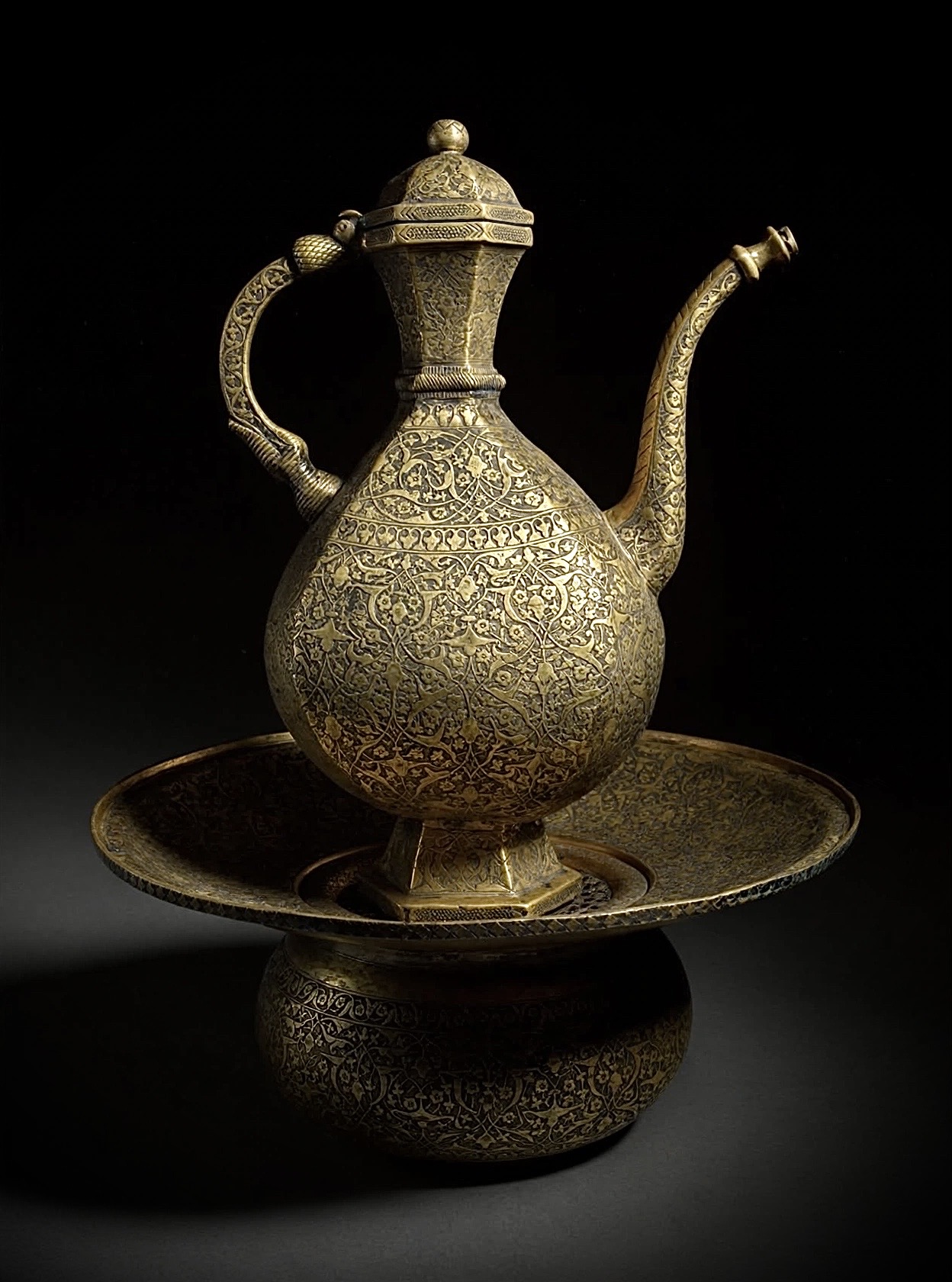
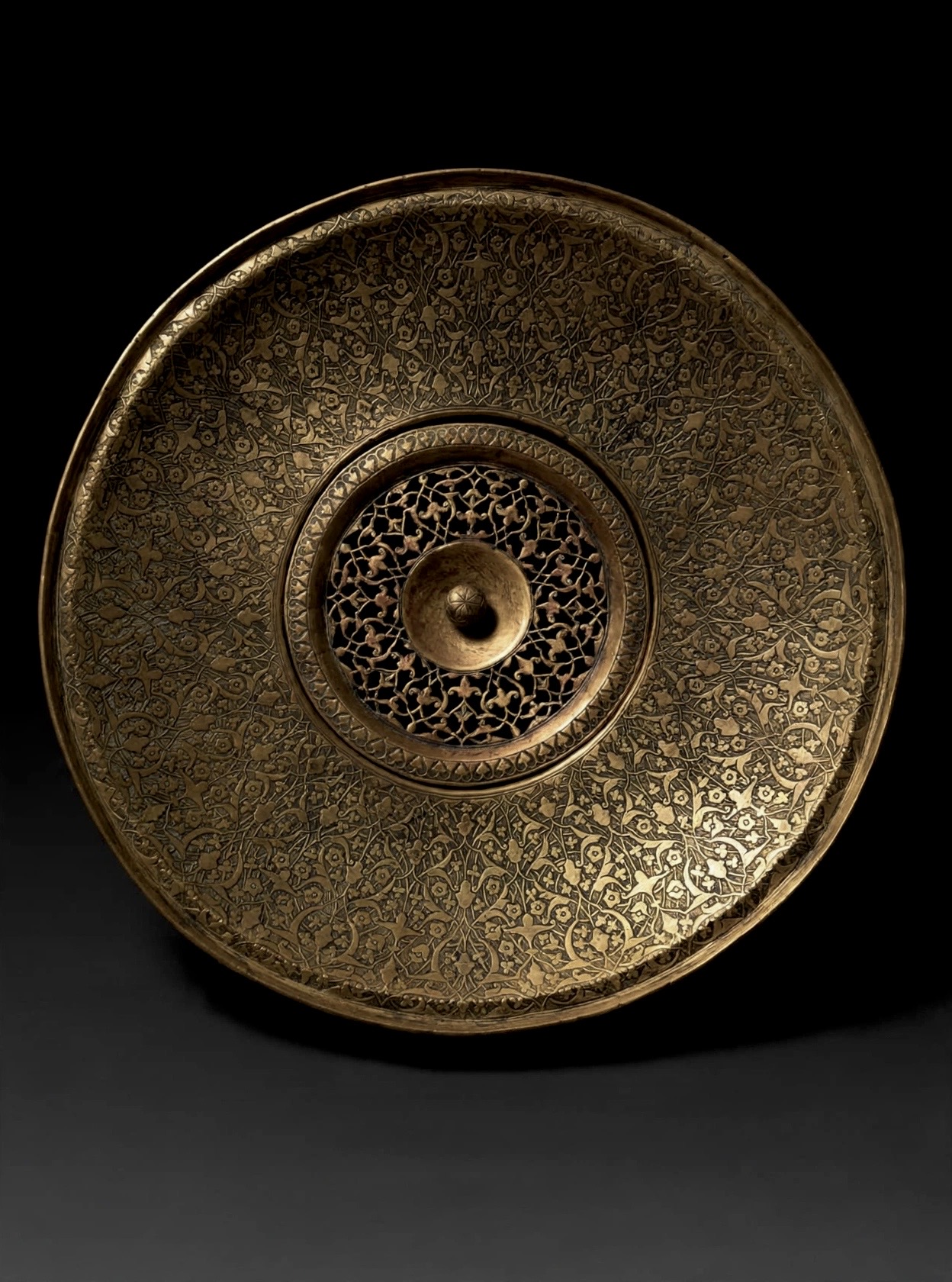
This magnificent ewer and basin is an adequate example of Deccan craftsmanship brass deep-engraved with Deccani scratches, sideways-lying scratches in black background inlay and the surface is decorated with dense, beautiful incised floral motifs organised into elegant lobed and drop-shaped panels framed with vegetal scrollwork. The shoulder and foot are further embellished with stylised bands of spiralling vines.
An exquisitely set Deccan ewer and its matching basin are exemplary of 18th-century Deccani metalwork, showcasing the refined craftsmanship and floral aesthetic of Mughal India.
The ewer features a bulbous body that narrows into a flared neck with a serrated mouth and a delicately contoured, dragon-head-like handle opposite an elegantly curved spout.
The basin is circular in shape with a matching foot and central opening designed to support the ewer It is similarly decorated with engraved floral panels alternating with geometric borders. Both pieces exhibit black inlay, highlighting key decorative areas and reflecting the Indo-Islamic fusion of form and ornament.
This ensemble was plausibly utilised in a courtyard palace or ceremonial context for ritual handwashing or ablution, consistent with the refined etiquette of elite Mughal households.
FOOTNOTES:
Deccani culture in the 18th century was characterized by a revival of regional arts, the transition of political power to the Asaf Jahi dynasty of Hyderabad, and a fusion of local Deccani traditions with Mughal and European influences.
This type of ewer and basin set reflects the luxurious lifestyle of Mughal and Deccani courts, where ceremonial ablution played an important role in both religious and social rituals. The integration of dense vegetal engraving with a harmonious form reflects the sophisticated metalworking traditions of the Deccan plateau, influenced by Persian, Ottoman, and indigenous Indian artistic vocabularies. Such pieces were treasured not only for their function but as symbols of refinement, hospitality, and piety.
CONDITION REPORT:
Adequate condition, some scratches along the edges, and numerous areas are coated with as viewed.