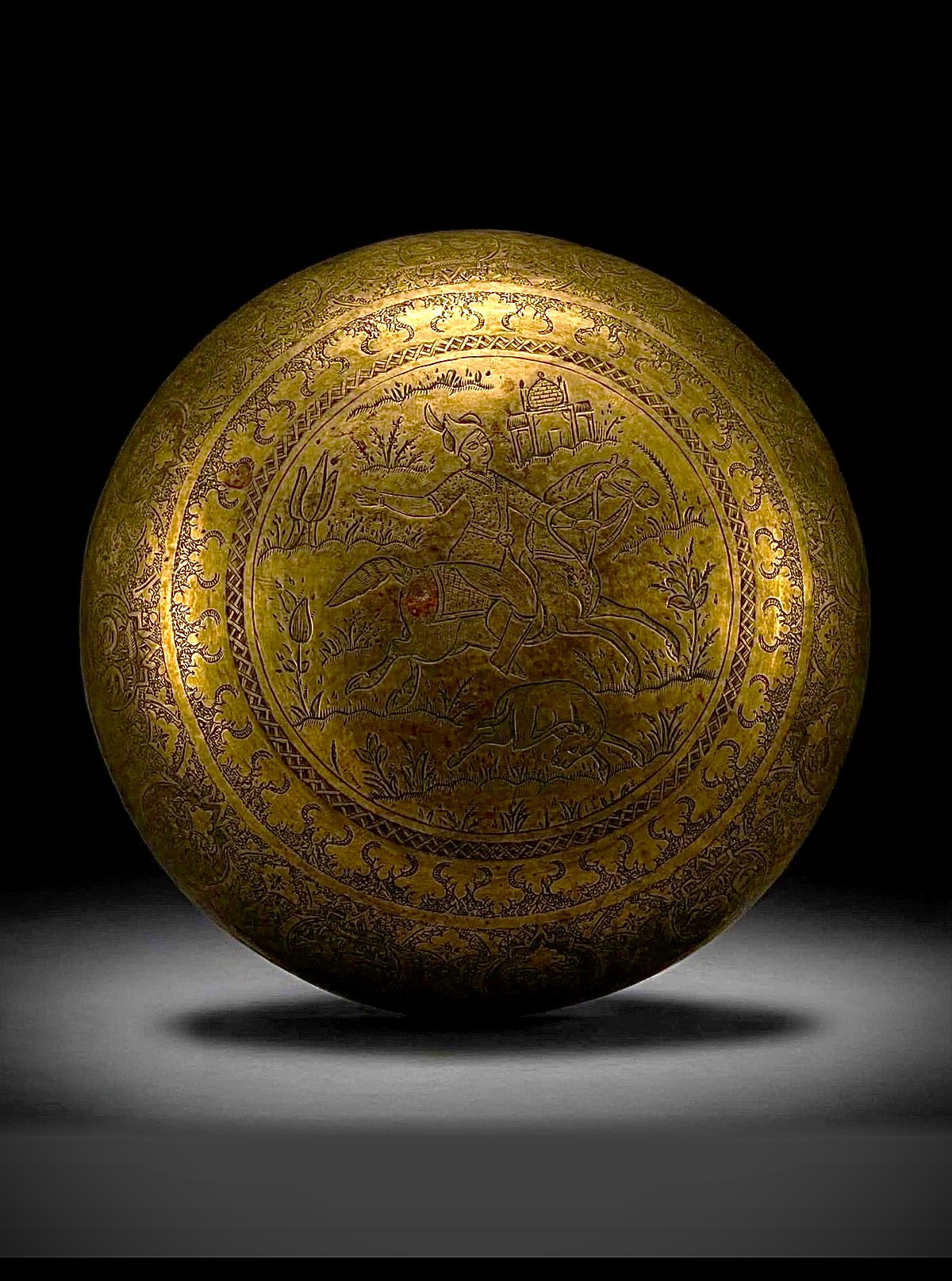
Royal hunting scenes (shikar) were a central visual motif during the Qajar period (1789–1925), particularly under Fath-‘Ali Shah (r. 1797–1834) and Nasir al-Din Shah (r. 1848–1896). Appearing across monumental rock reliefs, oil paintings, lacquerware, glazed tilework, and pictorial carpets, these scenes were deliberately modeled on ancient Sasanian precedents—such as the reliefs at Taq-e Bustan—to project royal authority, military prowess, and dynastic legitimacy.