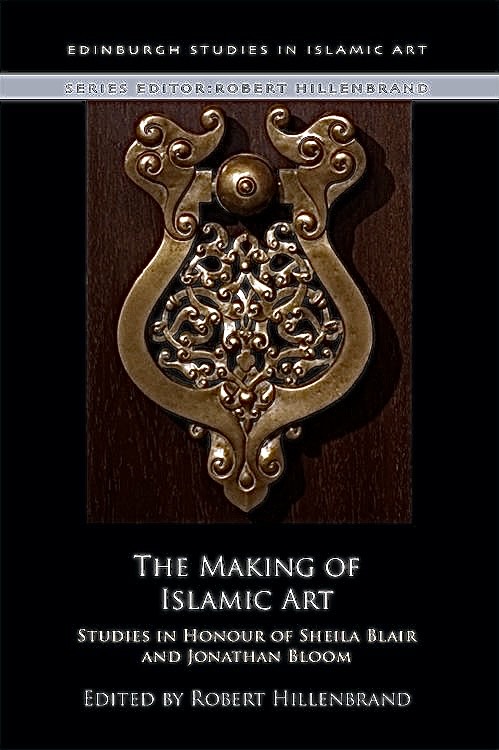
PERIOD | 1st half of 13th Century |
|---|
ORIGIN | Northern Iraq |
|---|
DIMENSIONS | H:41.5cm W:25.5cm |
|---|
DESCRIPTION: | The central, very rich arabesque on this magnificent door knocker consists of characteristic palmettes with little curls. It lies on several levels and has different slants. The ornamentation is closely related to the one found on a number of architectural decorations, woodcarvings, and metal open work from the Middle East, for example on an astronomical table signed by Muhammad ibn Khutlukh al-Mawsili in 639 H = 1241-1242 (British Museum). It must be considered a late derivative of the Samarra style, which had also been developed some 400 years earlier. The powerful horseshoe-shaped frame might bring to mind stylized dragons – a well-known motif in Jazira. |
|---|
FOOTNOTES: | In their own words, Jonathan Bloom and Sheila Blair espouse ‘things and thingness rather than theories and nations’.This book’s practical, down-to-earth dimension, expressed in plain, simple English, runs counter to the current fashion for theoretical explanations and their accompanying jargon when exploring the world of Islamic art. Its many insights, firmly anchored in artistic practice in architecture, painting and the decorative arts, are supported by ample technical know-how. The range is wide – mosques becoming temples; how religious buildings reflect politics; Yemeni frescoes and inscriptions; domestic Syrian 18th-century ornament; Egyptian bookbinding techniques; recycling and repair in Damascene crafts; conservation versus restoration; narrative on ceramics; metalwork with architectural motifs; lost buildings reconstructed; how objects speak; Muslim burials in China; the role of migrating potters; Mughal painting; stone carpet weights; the use of metals in Islamic manuscripts, calligraphy and modern artists’ books. |
|---|
PROVENANCE: | Acquired from Renowned Art Collectors |
|---|
CERTIFICATE: | Comes with a certificate from the Art Loss Register. |
|---|