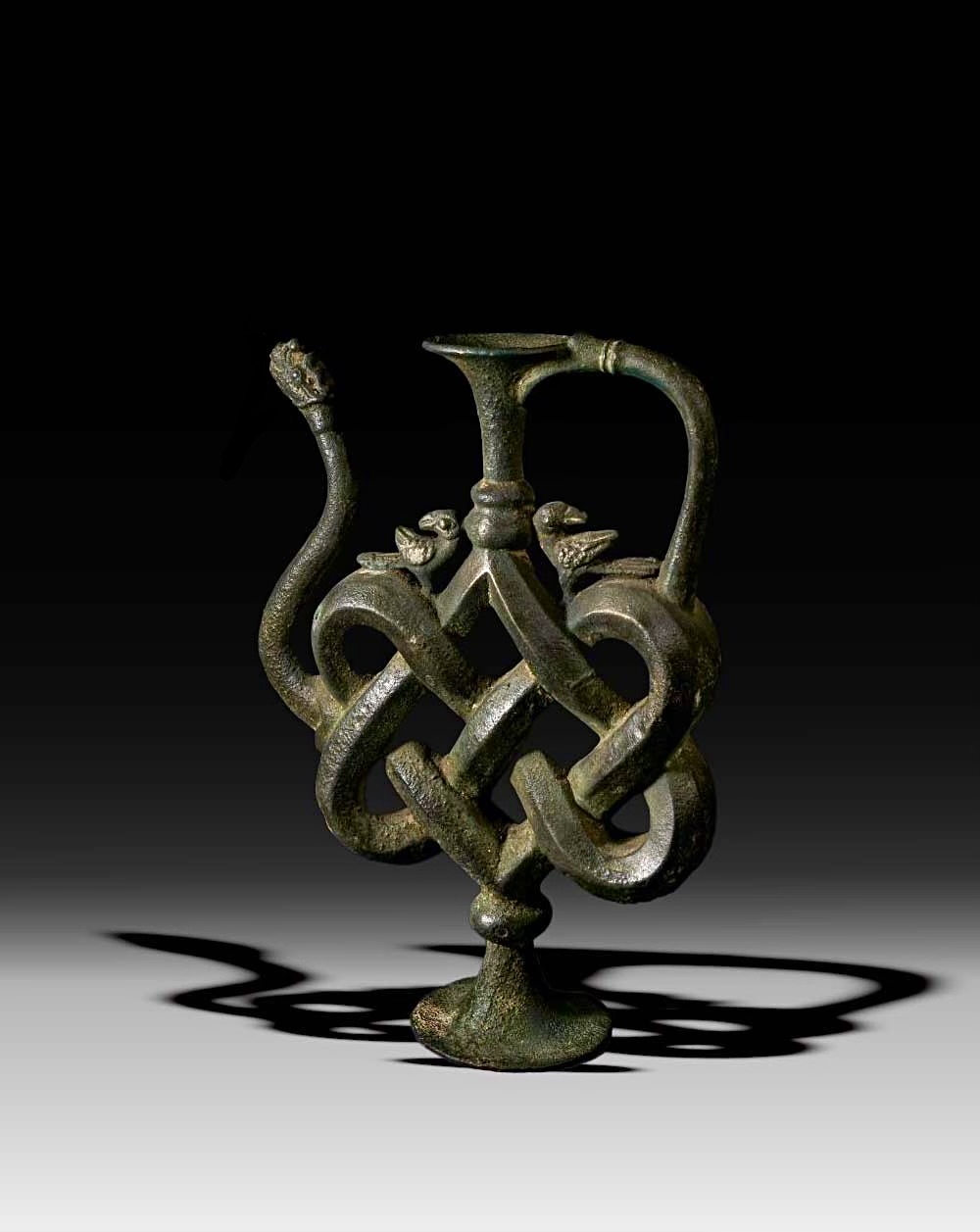
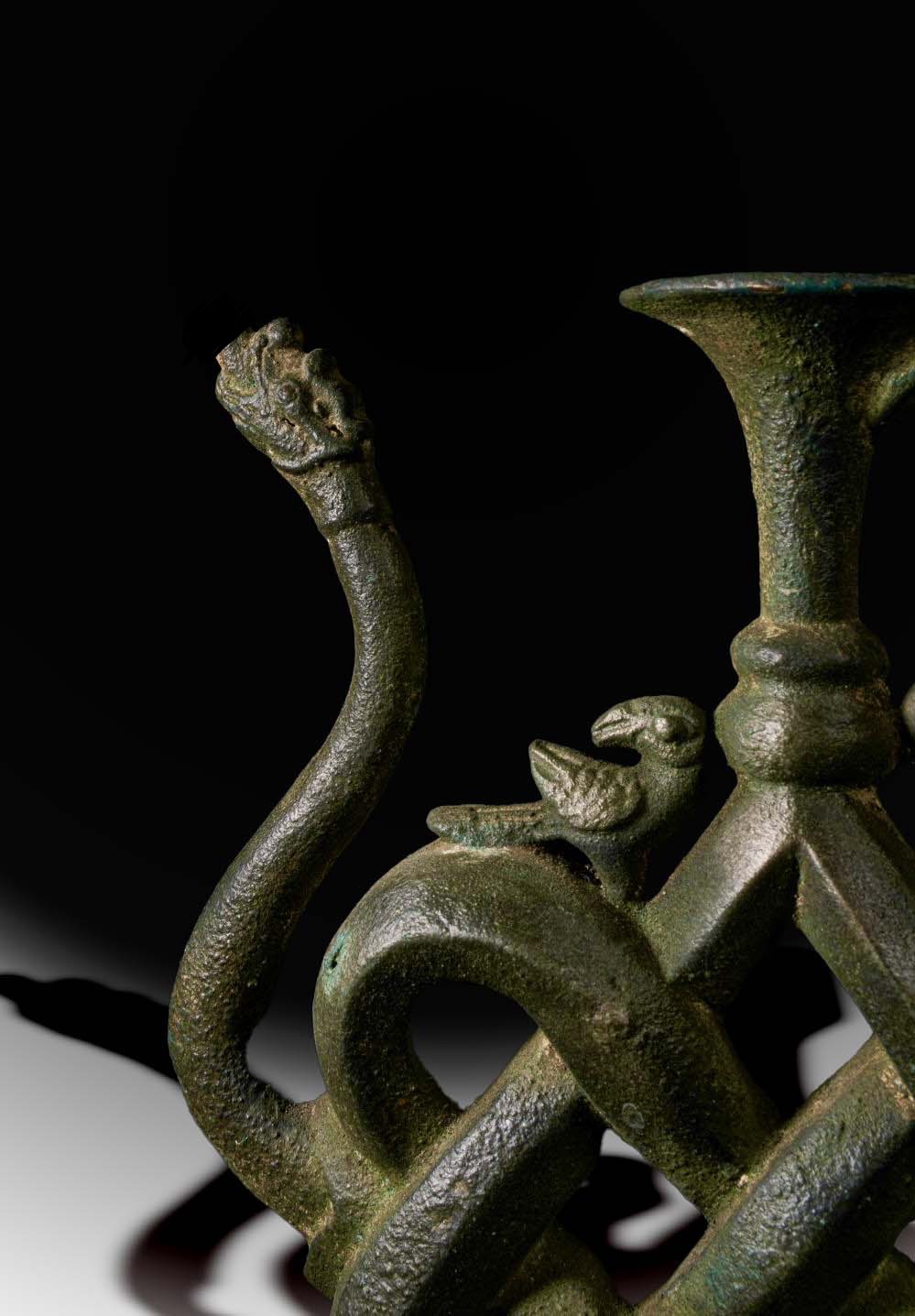
Deccani metalwork from this period has become a sharply rising area of interest, celebrated for its imaginative, often fantastical forms that blend Persianate, Indic and regional Deccani influences. Ewers of this sculptural complexity are extremely rare on the market, aligning it with museum-quality examples and making it a major highlight of the sale.
Metalworks from the Deccan and Central India (16th–19th century) heavily feature Mughal and Deccani Sultanate influences. Notable items include Bidri ware (zinc/copper alloy inlaid with silver),Ewers and weaponry like katars (push daggers), khanjars, and ritual objects.